
Maihueniopsis colorea
Maihueniopsis colorea
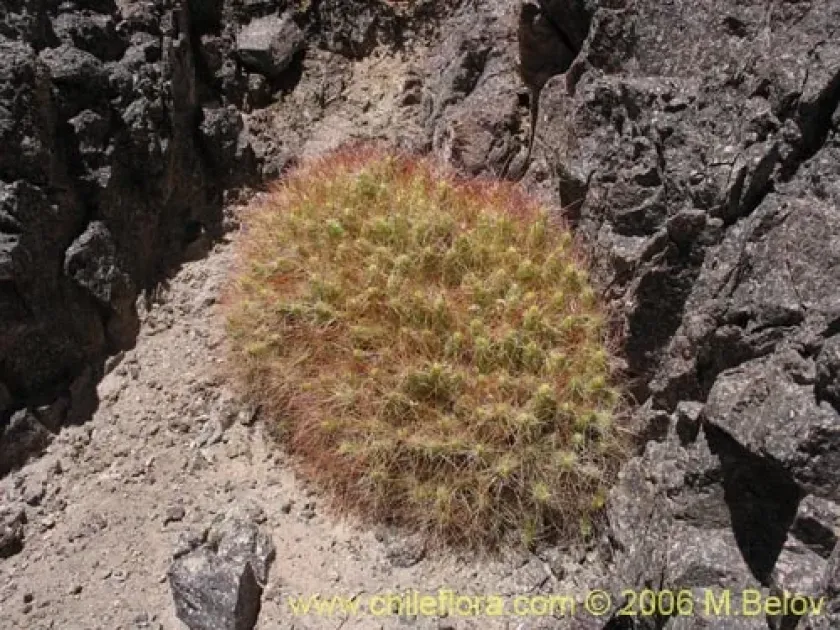
Description
Growing requirements
Maihueniopsis colorea is a member of the Cactaceae family, known for its resilience and unique adaptation to high-altitude environments. It is a succulent perennial that forms compact, ground-hugging mats.
The native distribution of this species is confined to the mountainous regions of South America, specifically in Chile and Argentina. These areas are characterized by harsh, arid conditions and rocky terrain.
Successful cultivation requires abundant sunlight and excellent drainage to mimic the plant's natural habitat. It thrives in mineral-based substrates that do not retain moisture for prolonged periods.
The climate requirements include significant temperature variations between day and night. During the active growth phase, warm temperatures are necessary, while winter cooling is essential for dormancy.
Watering management is the most critical aspect of the plant's care routine. It should be watered cautiously during the growing season and kept completely dry throughout the winter period to prevent tissue damage.
Main diseases and pests
The most significant threat to Maihueniopsis colorea is overwatering. Excessive moisture leads to root rot, which is often fatal to the cactus as the internal tissues become soft and necrotic.
Mealybugs are common pests that hide within the dense spine clusters. They can cause significant stress to the plant and facilitate secondary fungal infections through their feeding wounds.
Spider mites represent a major danger when humidity levels are kept too low for extended periods. These pests damage the epidermis, causing unsightly scarring that persists permanently.
Root-knot nematodes can colonize the root system, causing growth stunting and general decline. Soil sterilization is recommended to prevent the introduction of these pathogens into the potting media.
Botrytis and other fungal pathogens can develop if the plant is grown in poorly ventilated areas with high humidity. Proper airflow is vital to maintain the health of the plant's succulent tissues.