
Pacific madrone
Arbutus menziesii Pursh
Description
Growing requirements
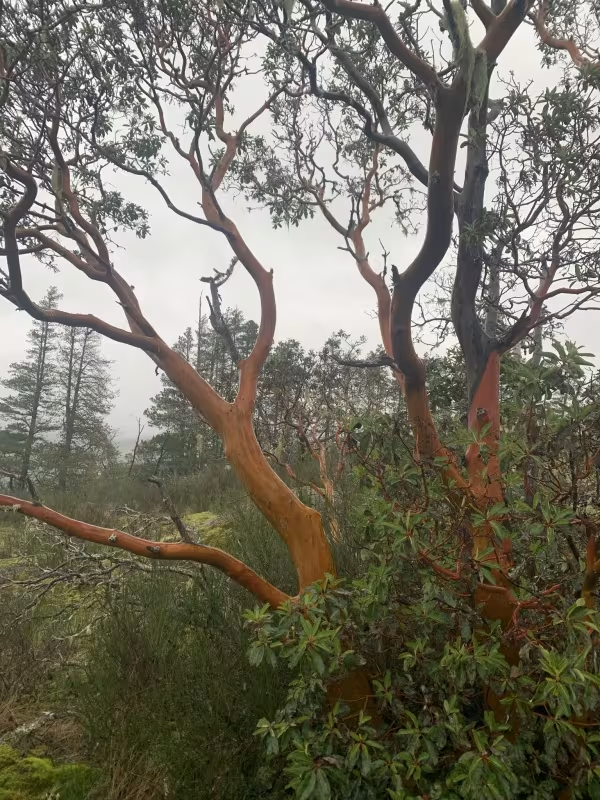
The Pacific madrone (Arbutus menziesii) is a distinct evergreen tree belonging to the Ericaceae family, widely recognized for its smooth, exfoliating red bark. It is native to the Pacific coast of North America, where it thrives in diverse climates ranging from coastal bluffs to inland mountains.
Successful establishment of the crop relies on high-quality drainage. Arbutus menziesii is highly sensitive to root rot and waterlogged conditions, making well-draining, loose soils essential. Soil texture should ideally be sandy or rocky, providing sufficient aeration for the sensitive root system.
The species requires full sun exposure to flourish and maintain its structural integrity. While young saplings may tolerate partial shade, mature trees demand significant solar radiation to develop their characteristic broad canopy and abundant flowering spikes.
Regarding climate, the Pacific madrone is adapted to Mediterranean-style patterns with distinct wet winters and dry summers. It is not cold-hardy in extreme continental climates, making site selection crucial in areas prone to hard frosts or prolonged freezing temperatures.
Agronomic management involves minimal intervention once the tree has fully established itself. Deep rooting allows the plant to access moisture during arid periods, though supplemental irrigation might be necessary in specific landscaping applications where soil depth is restricted.
Main diseases and pests
The primary pathological threat to the Pacific madrone is the pathogen Phytophthora ramorum, which causes sudden oak death and associated shoot blight. This fungus can cause significant dieback, targeting stems and foliage, and can be lethal if the tree is already under environmental stress.
Fungal leaf spots are common environmental issues, particularly in regions with high humidity. These infections manifest as necrotic lesions on leaves, reducing the photosynthetic efficiency of the tree and, in severe cases, leading to premature defoliation during the growing season.
Root rot, often triggered by the presence of Phytophthora species, is the most common cause of mortality. It frequently arises from poor drainage or excessive soil moisture levels near the trunk collar, which facilitates the rapid spread of soil-borne pathogens through the root system.
Insect pests, such as aphids and scale insects, frequently congregate on new shoots and leaf undersides. These pests extract sap, weakening the plant's vigor, and their honeydew secretions provide a substrate for sooty mold, which impairs gas exchange and sunlight absorption.
Integrated pest management strategies are recommended to maintain plant health. This includes promoting good air circulation, preventing overhead irrigation that leaves foliage wet for extended periods, and conducting regular sanitation to remove infected tissue that could harbor spores.