
Canary strawberry tree
Arbutus canariensis Duhamel
Description
Growing requirements
Arbutus canariensis, known as the Canary strawberry tree, is a prominent member of the Ericaceae family. Native to the Canary Islands, this evergreen tree or large shrub is celebrated for its attractive reddish bark and lush foliage, reaching heights of up to 10 meters in its natural habitat.
This species thrives in mild subtropical climates and is highly sensitive to severe frost. It performs best in regions where temperatures remain moderate throughout the year, making it an excellent candidate for maritime climates or specialized greenhouse cultivation in cooler zones.
Soil requirements are specific: the plant demands well-draining, slightly acidic or neutral soil. It is particularly vulnerable to waterlogging, which often leads to root rot; therefore, providing a porous soil structure is essential for long-term health and growth.
Agronomic management involves providing consistent, moderate moisture without oversaturating the root zone. During the active growing season, applying fertilizers designed for acid-loving plants can help maintain vibrant foliage and support healthy root development.
Propagation is generally achieved through seeds or stem cuttings. Young trees require protection from strong winds and intense direct sunlight during their early development phase to establish a stable and healthy framework.
Yield
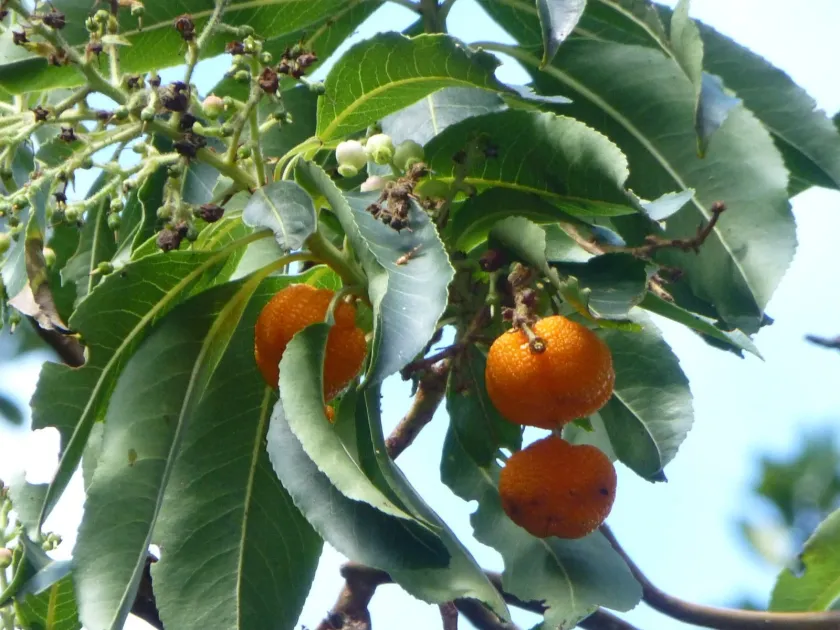
The Canary strawberry tree produces spherical, orange-red fruits that are technically edible. While not a major commercial staple, these fruits are harvested on a small scale for local culinary purposes, including the production of preserves, jams, and liqueurs.
Yield capacity fluctuates based on tree maturity and environmental stability. The fruit has a granular texture and a mild, sweet flavor, making it highly attractive to local bird populations, which serves as a natural seed dispersal mechanism.
In terms of timber, Arbutus canariensis wood is dense and durable. It is occasionally used by local craftsmen to create small, high-quality decorative items, taking advantage of its unique grain and resistance to wear.
Beyond edible and industrial uses, the tree is primarily managed for its high ornamental value. It is a staple in Mediterranean-style landscaping and urban parks, contributing to biodiversity and microclimate stabilization in coastal regions.
Sustainable harvesting practices are encouraged, as the tree's slow growth rate means that over-harvesting could negatively impact the local ecosystem. Most production remains focused on non-extractive, amenity-based utilization.
Main diseases and pests
The most common biological threats to Arbutus canariensis are fungal pathogens, specifically those causing root and crown rot under conditions of poor drainage. Proper site selection and soil amendment are the primary methods for preventing these diseases.
Pests like scale insects and mealybugs can infest the foliage, particularly in sheltered or poorly ventilated environments. Integrated pest management strategies, focusing on biological controls or targeted insecticides, are effective in maintaining tree health.
Nutritional deficiencies, specifically iron or magnesium chlorosis, are common when soil pH is improperly managed. Regular monitoring of the foliage and soil pH levels allows for timely adjustments through targeted fertilization.
Spider mites represent a risk during hot, dry summer months. Increasing humidity levels around the tree or using specialized miticides can help manage infestations before they cause significant leaf drop or loss of vigor.
Good sanitation practices, such as removing fallen debris and pruning away damaged branches with sanitized tools, are crucial for preventing the spread of secondary infections and maintaining the overall aesthetic and physical health of the tree.