
Luehea seemannii
Luehea seemannii
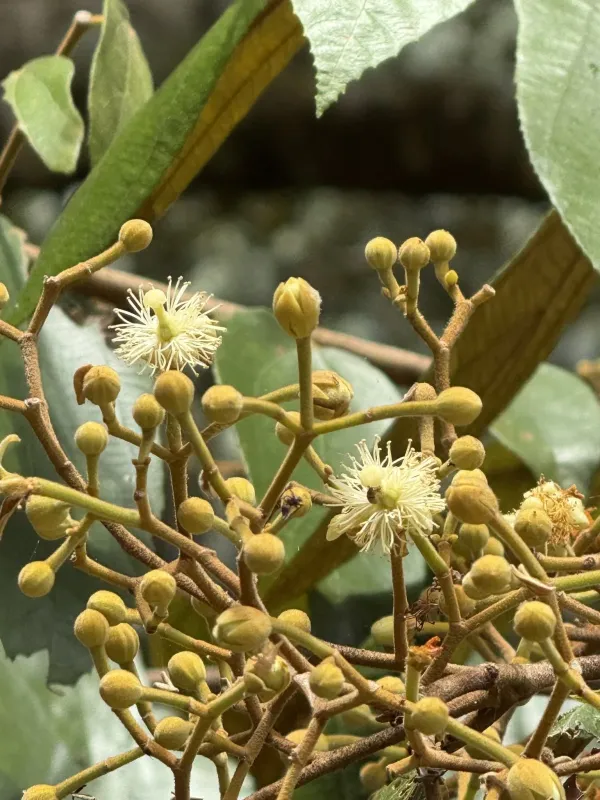
Description
Sowing dates
The seed propagation of Luehea seemannii requires specific conditions as seeds need stratification and high humidity for successful germination. The optimal sowing time in nurseries occurs at the beginning of the rainy season, ensuring stable moisture levels for young seedlings.
To accelerate germination, seeds are often subjected to preliminary scarification to breach the hard seed coat. Using lightweight, well-draining substrates rich in organic matter significantly increases the germination rate and seedling vigor.
Sowing is carried out in rows followed by pricking out into individual containers. It is essential to maintain proper distance between plants to ensure good ventilation and prevent the development of fungal diseases during early growth stages.
In its natural habitat, dispersal occurs via endozoochory or wind; therefore, in artificial plantations, it is necessary to simulate natural light conditions. It is recommended to use shaded areas to protect the saplings from direct sunlight in their first months of life.
Transplanting to a permanent site is conducted when seedlings reach a height of 40–60 centimeters. This is a critical stage requiring the preparation of planting pits supplemented with basic fertilizers to stimulate root system development.
Growing requirements
Luehea seemannii belongs to the Malvaceae family and is a typical representative of tropical forests in Central and South America. It prefers moist, well-draining soils with a neutral or slightly acidic pH level.
The crop is extremely sensitive to sunlight deficiency, categorizing it as a fast-growing, light-demanding species. It develops successfully in open spaces where other tree species might experience heat stress.
The temperature regime must be stable within the range of 22–30 degrees Celsius throughout the year. The species does not tolerate frost or prolonged dry seasons, as its physiology is adapted to a continuous growth cycle.
Regarding soil requirements, the tree shows tolerance to various soil types, although the best growth indicators are observed on deep loams. It does not tolerate waterlogging, so it is important to assess the groundwater level when choosing a site.
For full development, high relative air humidity is required. In regions with a pronounced dry season, partial leaf shedding may occur, which is the plant's defensive reaction to moisture deficiency in the soil.
Yield
The economic use of Luehea seemannii is focused on producing high-quality wood, valued for its strength and flexibility. The tree's growth is characterized by high intensity, making it a promising candidate for reforestation projects.
In agroforestry, this species is used to create fast-growing plantations that provide raw materials for woodworking industries. Plantation productivity depends on planting density and regular maintenance, including sanitary pruning.
The biological characteristics of the plant allow for the production of timber with a uniform structure. With proper plantation management, industrial volumes of merchantable timber can be expected 15–20 years after planting.
In addition to wood production, the tree serves a vital ecological function by promoting the rapid restoration of soil cover on degraded lands. The intensive biomass created by leaf litter improves overall soil structure.
The economic viability of the crop is supported by its demand in local construction. The wood is widely used for manufacturing furniture, tool handles, and decorative elements, offering good wear resistance properties.
Main diseases and pests
The main threats to Luehea seemannii are associated with infestations by wood-boring insects that can damage the trunks of young trees. Regular monitoring of the bark allows for the timely detection of infection centers.
Fungal diseases, such as leaf spot, develop when humidity levels are not properly managed. Prevention involves maintaining plantation hygiene and removing infected plant debris, which acts as a source of fungal spores.
Sucking insects can also cause damage by attacking young shoots and buds. The use of environmentally safe biopreparations allows for pest population control without causing harm to the surrounding environment.
Competition with aggressive weeds during the first years of growth can significantly slow down the crop's development. Mulching the base of the trees is an effective agronomic method for weed control.
Human factors also play a role, including improper logging techniques that lead to damage to the root systems of adjacent specimens. Adherence to proper maintenance rules ensures the longevity and productivity of the entire population.