
Luehea divaricata
Luehea divaricata
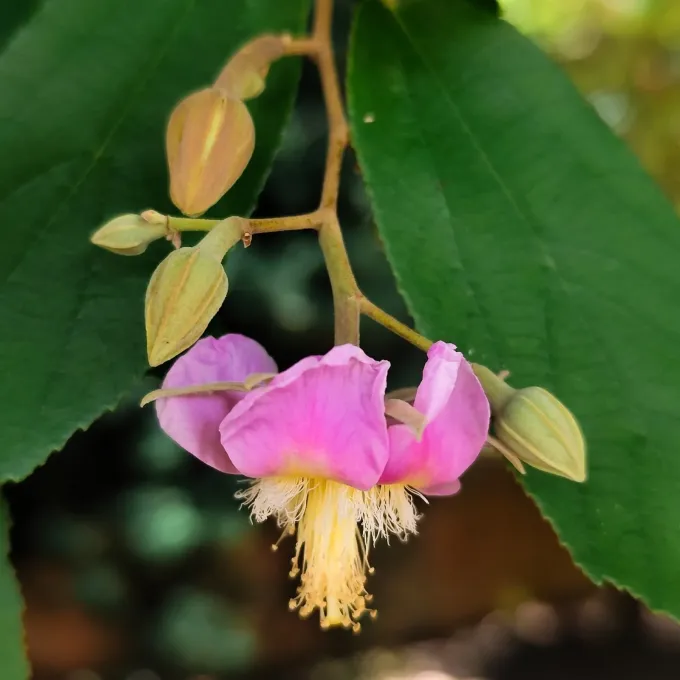
Description
Sowing dates
The propagation of Luehea divaricata is primarily conducted through seeds in professional tree nurseries. Seeds show high viability when harvested correctly and processed to break dormancy.
The optimal sowing time coincides with the start of the rainy season, ensuring adequate moisture for successful germination and early development of the seedlings in field conditions.
Seeds should be planted at a shallow depth of 1–2 centimeters. Using a light, well-draining substrate for seedbeds is essential to prevent seedling damping-off and facilitate root penetration.
After the appearance of the first true leaves, seedlings are transplanted into containers. This stage is crucial for developing a fibrous root system, which increases survival rates once planted in the field.
Seedlings are typically outplanted when they reach a height of 30–50 centimeters. Recommended planting density ranges from 1,100 to 1,600 trees per hectare, depending on the management goal.
Growing requirements
Luehea divaricata is a member of the Malvaceae family, native to the tropical regions of South America. It is a robust tree that performs well in diverse environmental settings.
The species thrives in deep, well-drained, and fertile soils. While it exhibits tolerance to a range of soil types, it performs best in soils with high organic matter content and a neutral pH.
Full sun exposure is required for vigorous growth. As a light-demanding species, Luehea divaricata does not compete well in shaded areas, making site selection critical for plantation success.
The plant is adapted to tropical climates and is sensitive to frost. While established trees can tolerate mild cold spells, prolonged freezing temperatures can cause significant tissue damage.
Management practices include regular weed control during the first three years of growth. Removing competing vegetation ensures the saplings receive sufficient nutrients and water.
Yield
The primary economic output of Luehea divaricata is its timber. The wood is valued for its strength, durability, and flexibility, making it a preferred material for furniture and light construction.
The bark of the tree is a significant source of tannins. These compounds are highly sought after in the leather industry, providing a valuable secondary revenue stream for forestry operations.
Beyond commercial use, this species plays a vital role in soil conservation. Its complex root architecture stabilizes soil layers, making it an excellent candidate for reforestation projects.
Flowering provides a resource for pollinators, specifically bees. The tree contributes to local apiculture and supports the biodiversity of the surrounding ecosystem.
The harvest cycle for technical timber typically spans 20 to 30 years. With proper silvicultural management, these plantations produce a consistent supply of high-quality wood products.
Main diseases and pests
Root rot is the most common pathology in young plantations, often exacerbated by poor soil drainage. Maintaining moisture balance is the primary defensive measure for nursery managers.
Defoliating insects can occasionally reach infestation levels, leading to reduced photosynthetic activity. Integrated Pest Management (IPM) strategies, including natural predators, are used to keep populations in check.
Stem borers pose a specific risk to the quality of the timber. Regular health monitoring and the rapid removal of infested trees are necessary to prevent the spread of these insects.
Environmental stress during prolonged droughts can increase the tree's susceptibility to pest attacks. Adequate water management during the establishment phase is key to plant resilience.
Biosecurity protocols regarding the transport of nursery stock are essential to prevent the introduction of regional pathogens that could jeopardize the health of established plantations.