
Southern mudwort
Limosella australis
Description
Growing requirements
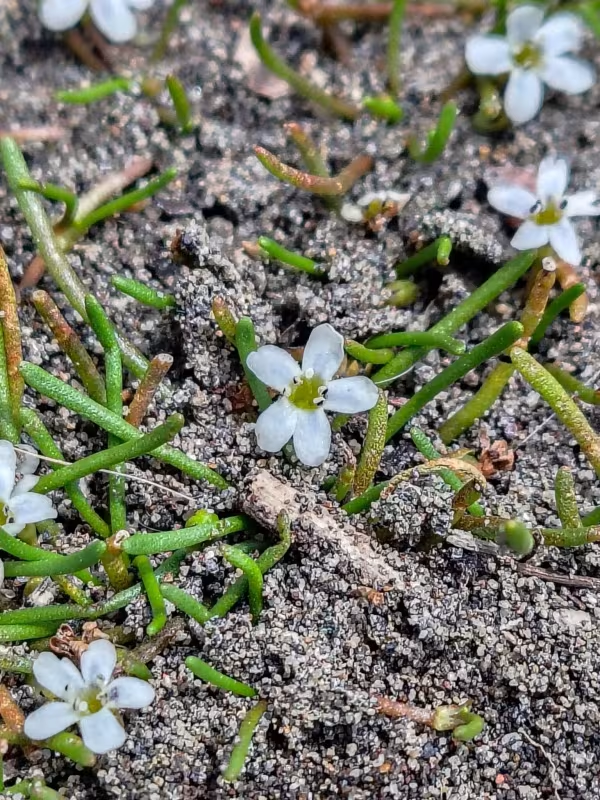
Southern mudwort (Latin: Limosella australis) is a perennial herbaceous plant belonging to the Scrophulariaceae family. This species is widely recognized for its specialized niche in riparian and wetland ecosystems across the globe.
The native range of the plant spans across temperate and subtropical regions, including parts of North and South America, Australia, and New Zealand. It is typically found thriving in wet, silty mud along the edges of ponds, rivers, and seasonal marshes.
The plant exhibits a distinct botanical structure, characterized by a basal rosette of slender, spoon-shaped leaves. Its biological plasticity allows it to survive both in shallow water and on intermittently wet soil surfaces.
In terms of environmental requirements, southern mudwort demands moist, nutrient-rich substrates and high ambient humidity. It is best suited for sites with consistent moisture, as it does not possess high drought tolerance due to its wetland origin.
Agricultural and commercial use of the plant is primarily focused on environmental restoration and water gardening. It serves as an effective ground cover in aquatic landscapes and contributes to the biodiversity of reclaimed wetlands, though it is not grown for traditional crop production.