
Libidibia paraguariensis
Libidibia paraguariensis
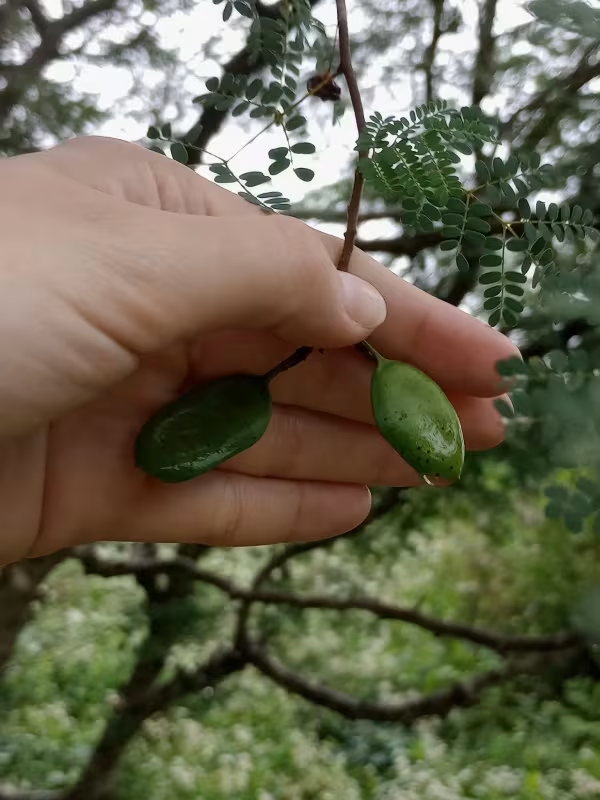
Description
Growing requirements
Libidibia paraguariensis is a distinguished tree species belonging to the legume family (Fabaceae). It is native to the dry tropical forests of South America, where it serves as a keystone species for local biodiversity and environmental stability.
The plant thrives in well-drained, sandy or gravelly soils, exhibiting high tolerance for low nutrient availability. Its biological adaptation allows it to flourish in areas where other species struggle, making it ideal for reforestation of arid regions.
Climate requirements involve high solar radiation and clearly defined dry seasons. The species is highly drought-resistant and does not require extensive irrigation once the root system has established, provided it is planted in full sun exposure.
Agricultural management is relatively simple compared to other timber crops. It involves proper spacing during planting to ensure structural integrity and regular monitoring for competing invasive weeds during the seedling stage of development.
The economic value of this tree is derived primarily from its dense, durable wood, often utilized in construction and specialized carpentry. Furthermore, it plays a vital role in ecological restoration projects aimed at preventing soil erosion in tropical climates.
Main diseases and pests
The primary biological threats involve wood-boring insects, which can compromise the structural integrity of the timber. Additionally, root fungal pathogens pose a risk when the plant is subjected to poor soil drainage or excessive stagnant moisture.