
Divi-divi
Libidibia coriaria
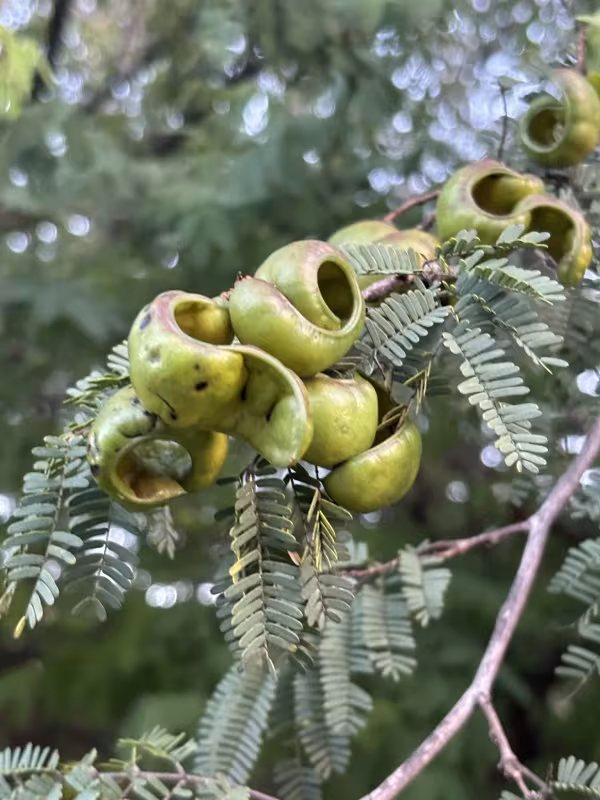
Description
Sowing dates
Propagation of Libidibia coriaria is typically achieved through seeds. Because the seeds are encased in a hard, impermeable seed coat, they require scarification or soaking in hot water to break dormancy and ensure successful germination.
The ideal time for sowing is at the beginning of the rainy season. This allows seedlings to establish their root systems before the onset of the dry period, which is crucial for survival in their native habitat.
Seedlings are often raised in nurseries in individual containers. This practice protects young plants from environmental stress and ensures a higher survival rate during the initial growth stages.
Transplanting to the permanent site should be done carefully to avoid damaging the taproot. Adequate spacing is essential, as the mature trees develop wide-spreading crowns that require significant space.
The growth rate in the first few years is relatively slow, necessitating diligent weed control around the base of the plant to prevent competition for nutrients and soil moisture.
Growing requirements
Libidibia coriaria is a member of the Fabaceae (legume) family. It is a drought-tolerant tropical tree that thrives in warm, semi-arid environments where distinct dry and wet seasons occur.
The tree performs best in well-drained, sandy, or loamy soils. It has a low tolerance for waterlogged conditions, which can lead to rapid fungal decay of the root system and plant death.
Temperature requirements are high, with the tree flourishing in temperatures ranging from +20°C to +35°C. It is remarkably resistant to heat and dry winds, making it ideal for arid landscaping.
Abundant direct sunlight is necessary for optimal development. Shaded sites lead to leggy growth and significantly lower fruit production, impacting the tree's primary economic value.
As a legume, the tree forms symbiotic relationships with nitrogen-fixing bacteria. This feature helps it thrive in impoverished soils, requiring minimal fertilizer application compared to other commercial crops.
Yield
The economic value of Libidibia coriaria is derived primarily from its pods, commonly referred to as divi-divi. These pods are highly valued for their exceptional tannin content, often exceeding 40%.
Mature trees produce consistent annual yields of pods. Production levels depend heavily on tree age, soil quality, and the intensity of sun exposure throughout the flowering and fruiting period.
The harvest capacity increases as the tree reaches maturity, usually after 7 to 10 years of growth. A healthy, well-maintained tree can remain productive for several decades.
To maximize yields, it is important to prevent excessive fruit drop caused by pests or environmental stress. Proper irrigation during critical development phases can help stabilize output.
Periodic pruning of the canopy is recommended to improve air circulation and light penetration, which directly correlates with the concentration of chemical compounds stored in the developing pods.
Main diseases and pests
The most common pests include various leaf-chewing insects and scale insects that infest younger stems, potentially weakening the plant during times of unexpected humidity.
Root rot caused by water stagnation is the most significant disease risk. Prevention involves ensuring excellent soil drainage and avoiding the accumulation of moisture around the tree trunk.
Pod-boring beetles can affect the quality of the harvested product by destroying seeds and reducing the purity of the tannin-rich material, which impacts the final market price.
Fungal leaf diseases may occur in high-humidity areas with poor air movement. Proper plant spacing and selective thinning of the crown are effective management strategies for mitigating these risks.
Integrated pest management is preferred over chemical interventions to maintain the ecological integrity of the plantations and ensure the safety of the surrounding biodiversity.
Harvesting
Harvesting begins when the pods reach full physiological maturity, indicated by their dark brown color and brittle texture. The pods are typically collected by hand or shaken from the branches.
Post-harvest, the pods must be thoroughly dried in the sun to reduce their moisture content. This is essential for preventing mold growth and preserving the integrity of the tannins during storage.
Proper storage involves placing the dried material in cool, dry, and well-ventilated structures to prevent moisture absorption and ensure a long shelf life before industrial processing.
Mechanical processing, such as milling or grinding the dried pods, is often performed to create a standardized extract, which is easier to transport and sell to the leather industry.
The efficiency of the harvest significantly impacts the final quality of the tannic acid extracted. Clean, debris-free harvesting methods ensure a premium grade product for commercial use.