
Libidibia ferrea
Libidibia ferrea
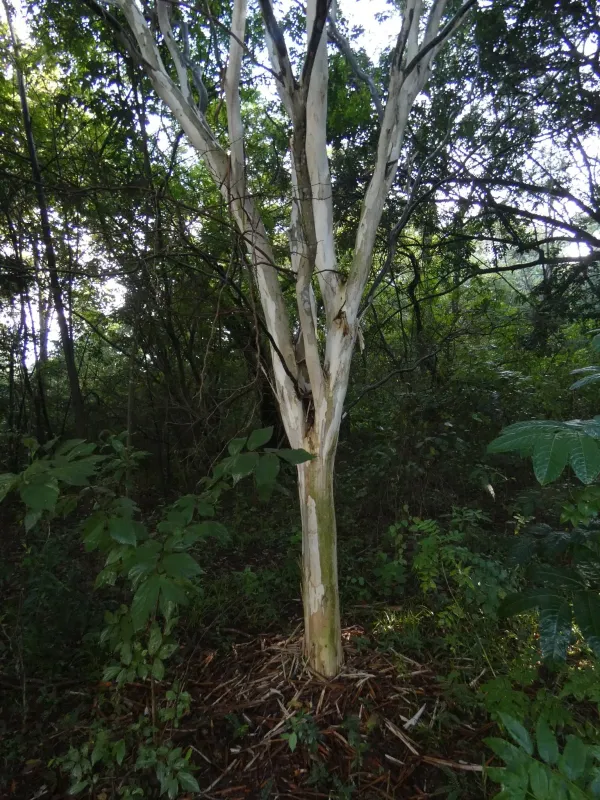
Description
Sowing dates
The seeds of Libidibia ferrea possess a very hard seed coat, necessitating scarification or immersion in hot water to initiate successful germination.
Sowing should be scheduled at the beginning of the rainy season, when ambient temperatures remain consistently above 22 degrees Celsius.
Seeds should be planted in well-draining sandy substrates at a depth of approximately 2 to 3 centimeters to ensure optimal contact with the medium.
Germination is often asynchronous, occurring over a period of several weeks, which requires constant monitoring of moisture levels in the nursery beds.
Young seedlings are ready for outplanting once they have reached a sturdy height of 40 to 60 centimeters, typically achieved after one year of careful cultivation.
Growing requirements
Belonging to the Fabaceae family, Libidibia ferrea is a deciduous tree native to tropical regions characterized by distinct wet and dry seasons.
The species requires full sun exposure for healthy development, as shading significantly slows down the growth rate of both young and mature trees.
Well-drained soils, specifically sandy or loamy types with a neutral to slightly acidic pH, provide the most favorable environment for root expansion.
This tree exhibits remarkable drought tolerance, adapted to harsh conditions where seasonal rainfall is scarce for several months of the year.
Proper aeration of the soil is critical for the survival of this species, as stagnant water and poor drainage can lead to rapid root decay.
Yield
The primary commercial product is its extremely dense, durable wood, frequently referred to as ironwood, which is highly valued for high-end construction.
Rotation cycles for harvesting timber typically span 20 to 30 years, during which the tree accumulates significant biomass and high-quality heartwood.
Besides timber, the fruits and bark are rich in tannins, serving as a sustainable natural resource for the leather tanning and textile industries.
The tree provides substantial secondary benefits, including high-energy firewood and charcoal, which are common byproducts of maintenance pruning.
In agroforestry systems, Libidibia ferrea contributes to nitrogen fixation, improving soil fertility for surrounding vegetation and promoting ecosystem health.
Main diseases and pests
Fungal infections, particularly root rot, represent the most significant threat to young plants when nursery conditions are overly humid.
Mature stands can be susceptible to wood-boring beetles that target stressed trees, often leading to structural weakness over long periods.
Termites can cause significant damage to the root collar in regions where the tree is under constant water stress during the dry season.
Effective management requires maintaining adequate spacing between trees to facilitate air movement, which minimizes the buildup of pathogenic spores.
The tree's high tannin content provides a robust natural defense mechanism, rendering it resistant to a wide range of common foliar pests.