
Leucocoryne purpurea
Leucocoryne purpurea
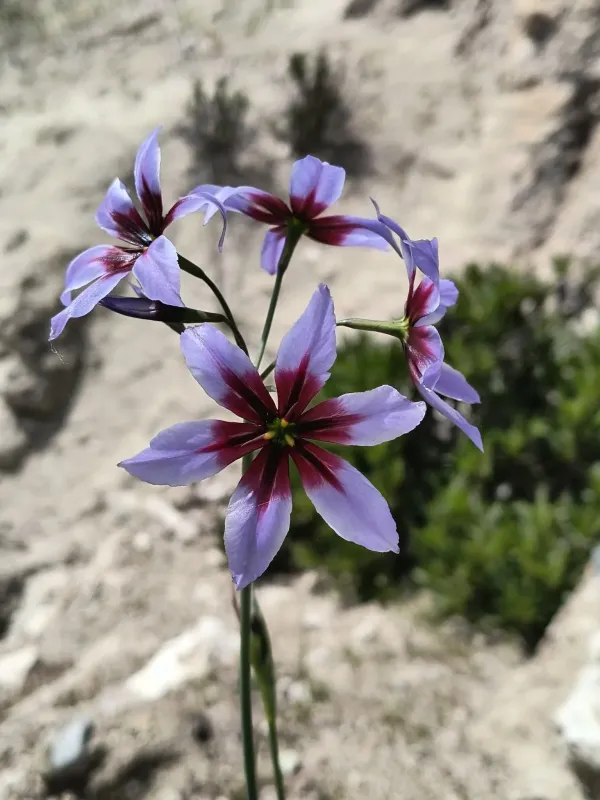
Description
Sowing dates
Leucocoryne purpurea is a bulbous perennial belonging to the Amaryllidaceae family, native to the arid regions of Chile. Planting of the bulbs in open ground should be carried out in spring when the soil temperature reaches 10-12 degrees Celsius, as the crop is highly sensitive to cold.
In temperate climates, the container method is preferred for growing. Bulbs are planted at a depth of 8-10 centimeters with 10-centimeter spacing to ensure optimal airflow between plants.
In regions with mild winters, autumn planting is permissible provided that the soil is deeply mulched. It is essential to provide a thick drainage layer in the planting hole to prevent water stagnation, which is fatal to the bulbs.
The growing season begins with the appearance of narrow basal leaves, followed by the development of the flower stalk. Correct timing allows the plant to complete its full life cycle before entering the summer dormancy period.
For seed propagation, sowing is performed in late winter in a greenhouse. Seedlings require moderate watering and bright, indirect light to develop a strong root system and full-sized bulbs by the end of the first year.
Growing requirements
The culture has strict light requirements. For full flowering and vibrant petal coloration, the plant requires direct sunlight for 6-8 hours daily.
The soil should be light, well-draining, and have a slightly acidic to neutral pH. Heavy clay substrates are generally unsuitable as they promote bulb rot.
During the active growth phase, Leucocoryne requires moderate irrigation. It is crucial to avoid overwatering, especially during the bud-forming stage, as excess moisture causes the stems to lodge.
Temperature management is a key factor in development. The optimal daytime temperature ranges from 20 to 25 degrees, while significantly lower nighttime temperatures mimic the natural environmental conditions of the Chilean foothills.
Fertilization should be performed using mineral compositions with low nitrogen content early in the season. Excess nitrogen leads to excessive foliage growth at the expense of floral production.
Main diseases and pests
The primary threats are fungal infections resulting from soil moisture issues. Basal rot is the most common disease, often leading to the complete loss of the bulb.
Under greenhouse conditions, plants can be attacked by spider mites and aphids, which feed on leaf sap. Preventative treatments with broad-spectrum insecticides allow for effective pest management.
Slugs and snails can damage young leaves during humid weather, making the use of physical barriers or granulated baits necessary around the plantings.
Viral diseases manifest as leaf mosaic patterns and floral deformation. Infected specimens must be immediately removed and destroyed, as there are no chemical cures for these pathogens.
Adhering to crop rotation principles and disinfecting the potting mix before planting are the most effective preventive measures against soil-borne pathogens.