
Leptinella squalida
Leptinella squalida
Description
Growing requirements
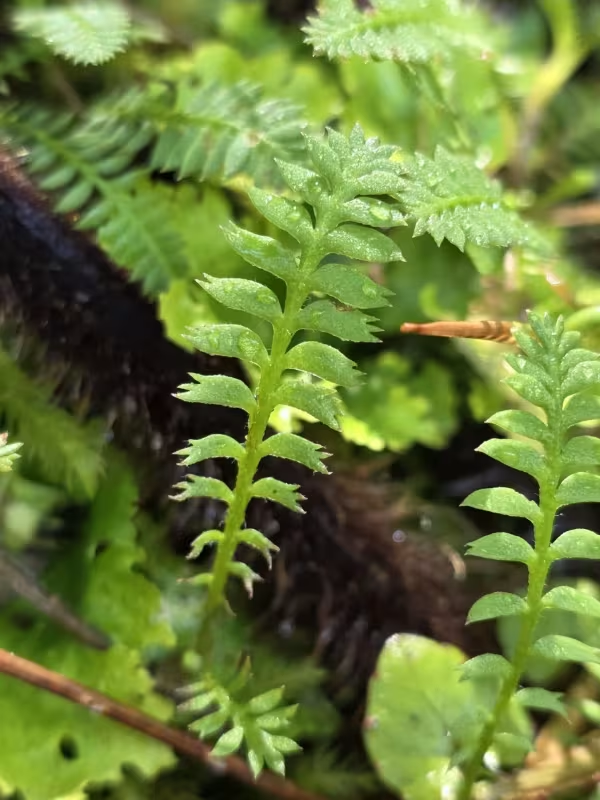
Leptinella squalida, commonly known as brass buttons, is a perennial herbaceous plant belonging to the Asteraceae family. It is native to New Zealand and is widely prized in horticulture for its ability to form dense, fern-like mats.
The plant grows through creeping rhizomes that spread along the ground, making it an excellent choice for filling gaps between paving stones or creating a lush, moss-like lawn substitute in low-traffic areas.
For optimal health, Leptinella squalida requires partial shade to full sun and consistently moist, well-draining soil. It is particularly sensitive to drought and must be irrigated frequently during dry summer months.
Regarding soil, it prefers slightly acidic to neutral environments rich in organic matter. While it is adaptable, it does not tolerate waterlogged conditions that can cause the rhizomes to rot during the dormant season.
Cultivation practice involves periodic maintenance to keep the area free of invasive weeds. As it is a slow-growing spreader initially, ensuring a clean bed during the first season of planting is crucial for successful coverage.
Main diseases and pests
Diseases are rare for Leptinella squalida, provided the soil drainage is managed correctly. If water stagnates, fungal infections in the root system can occur, leading to yellowing of the foliage and eventual death of the mat.
The primary pests affecting this crop are slugs and snails, which can feed on the soft, delicate foliage. Cultural control methods, such as maintaining good airflow and reducing debris around the plants, are usually sufficient to mitigate these risks.