
Lepisorus ussuriensis
Lepisorus ussuriensis
Description
Growing requirements
Lepisorus ussuriensis is a perennial fern species belonging to the Polypodiaceae family. It is typically found growing as an epiphyte on tree trunks or as a lithophyte in rocky crevices, demonstrating a remarkable ability to colonize vertical surfaces in humid environments.
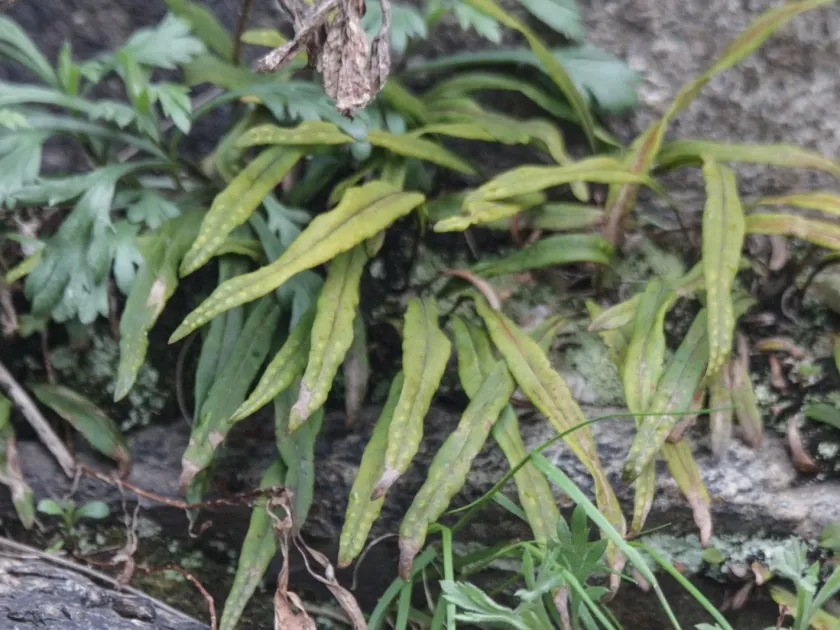
The plant features a creeping rhizome covered in scales and simple, leathery, lanceolate fronds. This morphology is an evolutionary adaptation that allows the fern to survive in micro-habitats where water supply is periodic and soil depth is negligible.
The native range of this fern extends across the Russian Far East, particularly the Primorsky region, as well as temperate zones of China, Korea, and Japan. It thrives in dense forest canopies where humidity remains consistently high throughout the growing season.
Successful cultivation of this species requires strict adherence to environmental parameters, including high relative humidity and moderate, indirect light. It cannot tolerate direct exposure to the sun, which can dehydrate the waxy cuticle of its fronds.
Regarding its agricultural status, Lepisorus ussuriensis is not an industrial crop. Its primary significance is ecological and ornamental, often studied by botanists for its role in local biodiversity or kept by enthusiasts in controlled vivariums and specialized botanical gardens.