
Lemon basil
Ocimum x citriodorum Vis.
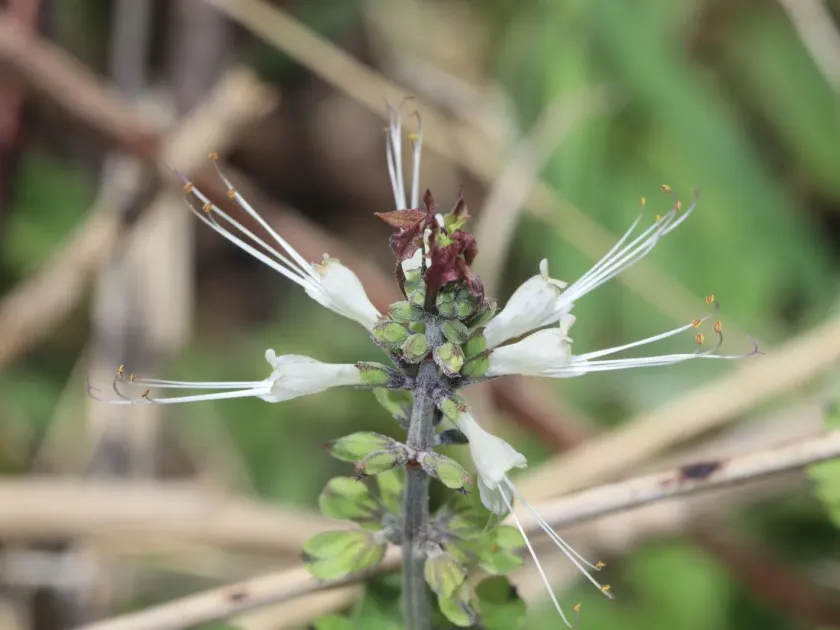
Description
Sowing dates
Lemon basil is a heat-loving crop, so it should only be sown outdoors after the danger of frost has passed and soil temperatures have reached 15-18°C.
For indoor propagation, seeds should be sown in trays or containers 45 to 60 days before the expected planting date to ensure a vigorous head start for the season.
Seeds require light for germination and should be sown at a very shallow depth, approximately 0.5 cm, and lightly covered with soil or vermiculite.
Maintaining a constant temperature of 22-25°C is essential for uniform germination, along with adequate moisture levels during the sensitive seedling stage.
Proper spacing is crucial; plants should be thinned or transplanted to allow sufficient airflow, which helps prevent seedling damping-off diseases.
Growing requirements
Lemon basil thrives in full sunlight and requires at least 8 hours of direct exposure daily to develop its signature high concentration of essential oils.
The plant prefers well-drained, fertile, and light soil textures with a slightly acidic to neutral pH level, typically ranging between 6.0 and 7.0.
Regular watering is necessary to keep the soil consistently moist but never waterlogged, as stagnant water is detrimental to the plant's delicate root system.
Temperature fluctuations are a significant stressor; if temperatures drop below 10°C, the growth rate of lemon basil slows down significantly or ceases.
Soil nutrient levels should be managed with balanced organic fertilizers to support healthy leaf development without encouraging excessive, weak growth.
Yield
The yield of lemon basil is influenced by environmental conditions, the frequency of pruning, and the overall fertility of the growing substrate.
Under optimal field conditions, growers can expect an average yield of 1.5 to 2.5 kg of fresh herb material per square meter during the active season.
In controlled greenhouse environments, utilizing modern cultivation practices, yields can increase significantly due to extended production cycles and precise climate control.
Frequent pruning of the growing tips is a standard commercial practice that encourages lateral branching and results in a denser, more productive plant canopy.
The harvest cycle usually begins 40-50 days post-germination, making it an efficient crop for producers looking for a quick turnover in market supply.
Main diseases and pests
Fusarium wilt is a primary threat to lemon basil crops, often manifesting as sudden wilting and discoloration of the stems, leading to potential crop failure.
Damping-off caused by soil-borne pathogens is a common problem in nurseries where humidity levels are kept too high and airflow is restricted.
Aphids are the most frequent insect pests, clustering on the undersides of young leaves and causing deformation through their sap-feeding activity.
Spider mites can also be problematic in protected environments, particularly when the ambient air is dry and temperatures remain consistently high.
Effective management relies on a combination of crop rotation, proper sanitation, and ensuring that environmental conditions are not favorable for fungal growth.
Harvesting
The ideal time for harvesting lemon basil is during the early morning hours, as this is when the essential oil content is highest, ensuring maximum aroma.
When harvesting, it is best to cut above the second or third set of leaves from the base of the stem to encourage regrowth and secondary production.
Harvesting should be completed before the plant enters its full flowering stage, as once blossoms appear, leaf quality and flavor intensity tend to decline.
Post-harvest, the herbs must be handled with care and kept out of direct sunlight to prevent wilting and degradation of volatile aromatic compounds.
For long-term storage, drying in cool, dark, and well-ventilated rooms or flash-freezing is recommended to preserve the distinct lemon fragrance and culinary value.