
Henna
Lawsonia
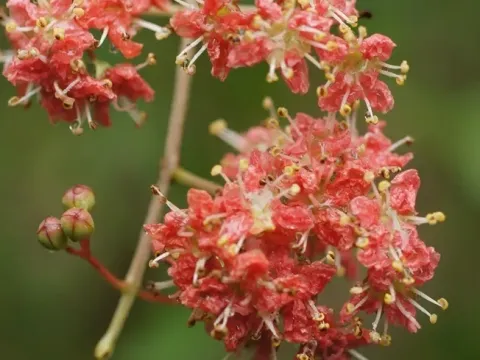
Henna (Lawsonia inermis) is a perennial shrub of the Lythraceae family. It is a highly valued plant known for its leaves, which produce the characteristic reddish-orange dye widely used in cosmetics and textiles.
What the section contains

Henna
The plant is typically propagated through seeds or stem cuttings. Seed sowing is usually performed in well-drained, sandy soil at the onset of the rainy season to provide sufficient moisture for germination and early establishment.
Cuttings are often preferred for commercial plantations to ensure consistency in color intensity and yield. These cuttings are raised in nursery conditions with controlled humidity before being transplanted into the main field.
Spacing between plants is vital for long-term productivity. Rows are generally spaced 60 to 90 cm apart, allowing the shrubs to develop a dense canopy while maintaining easy access for mechanical or manual harvesting.
The plant is long-lived, often remaining productive for over a decade if properly managed, making it a sustainable choice for farmers in arid and semi-arid climates.
Henna thrives in hot and dry climates with high light intensity. Intense sunlight is a physiological requirement for the synthesis of the napthoquinone molecule, known as lawsone, which is the plant's main pigment.
While the plant is quite hardy, it prefers well-drained soil types. It performs best in soils with a pH ranging from 5.5 to 7.5, demonstrating resilience in nutrient-poor conditions where other crops would fail.
Water management is crucial. Despite being drought-tolerant once established, henna requires consistent moisture during the early growth stages to maximize the vegetative biomass necessary for dye production.
Temperatures should remain consistently above 20°C for optimal growth. Exposure to freezing temperatures can cause significant damage or even plant death, limiting its primary cultivation zones to tropical and subtropical regions.
Fertilization with organic compost or balanced nitrogen-based fertilizers during the early monsoon season promotes vigorous foliage growth, which is essential for maximizing yield in commercial operations.
The most significant threat to henna plantations is root rot, typically caused by waterlogged soil conditions. Proper soil drainage and avoiding over-irrigation are critical management strategies to prevent these fungal issues.
Pests such as aphids and spider mites can infest the younger leaves, particularly during the hot, dry season. These pests suck the sap, leading to leaf distortion and reduced quality of the final pigment product.
Leaf spot diseases can also occur if humidity levels fluctuate significantly. These infections can blemish the foliage, leading to lower-grade production as the pigment uniformity and concentration may be impacted.
Integrated Pest Management (IPM) is strongly recommended to protect the crop. The focus remains on biological controls to ensure the final product meets international safety standards for cosmetic applications.
Regular monitoring and pruning of infected branches are essential to maintain the overall plant health and productivity of the henna plantation throughout the growing cycle.
Harvesting is performed when the leaves are at their highest pigment concentration, which usually occurs just before the plant enters full bloom. Depending on the climate, two to three harvests per year are possible.
Leaves are collected either by manual plucking or mechanical harvesting. The collected material is meticulously cleaned to ensure no twigs or dirt remain, as these contaminants reduce the quality of the powdered dye.
Drying is the most critical post-harvest stage. It must occur in shaded areas to prevent the direct sunlight from breaking down the dye molecules. Proper drying is key to preserving the vibrant color of the henna.
Once the leaves reach the desired moisture content, they are milled into a fine, uniform powder. This powder is then sifted to remove coarse stems and particles to ensure a smooth, premium product for the user.
The final powder is packaged in moisture-proof containers to maintain its efficacy and shelf life before being distributed for use in henna tattoos, hair coloring, and skin conditioning products.