
Common toothwort
Lathraea squamaria
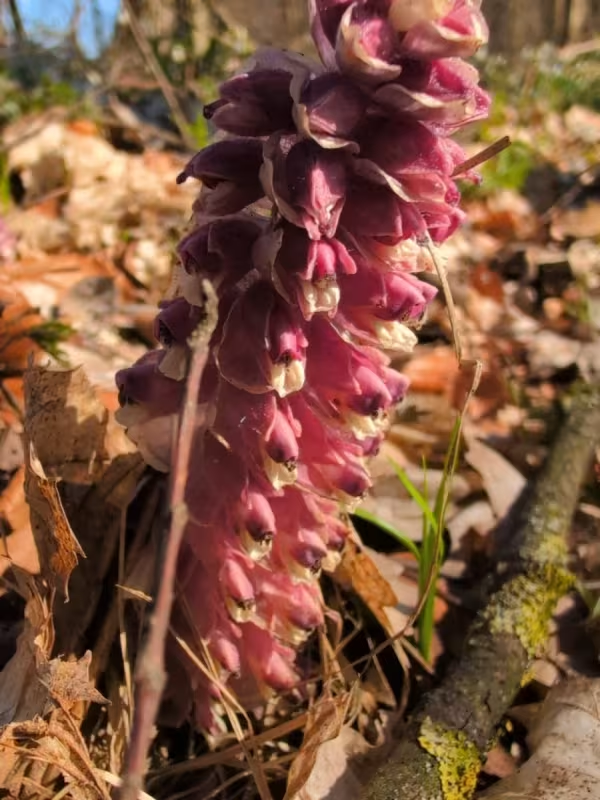
Description
Growing requirements
Common toothwort belongs to the family Orobanchaceae. It is a distinctive perennial parasitic plant that lacks chlorophyll, meaning it is entirely dependent on its host plant for survival and nutrients.
The native range of this species spans across the forests of Europe and Western Asia. It is typically found in deciduous and mixed forests, thriving in shady environments where host trees are abundant.
Botanically, the plant consists primarily of a fleshy, branched rhizome covered in scale-like leaves. Only the flowering spikes emerge above the ground, usually appearing in early spring before the forest canopy closes.
The plant attaches itself to the roots of trees and shrubs, such as hazel, alder, or beech, using specialized root structures called haustoria. These structures penetrate the host roots to absorb water and minerals.
It demands specific habitat conditions, including cool, moist, and humus-rich soil. It is frequently observed in riverine woodlands and deep ravines, where the microclimate remains stable and humid throughout the early growth season.