
Lathraea rhodopea
Lathraea rhodopea
Description
Growing requirements
Lathraea rhodopea, known as the Rhodope toothwort, belongs to the Orobanchaceae family. It is a strictly root-parasitic herbaceous plant that lacks chlorophyll, meaning it is not a crop for commercial agriculture but rather a biological organism dependent entirely on host plants for its nutritional needs.
The native range of this species is limited to the Balkan Peninsula, with a focus on the Rhodope Mountains. It typically thrives in temperate, moist forest environments where it finds suitable host tree species, such as species of hazel (Corylus), hornbeam (Carpinus), or beech (Fagus), to sustain its life cycle.
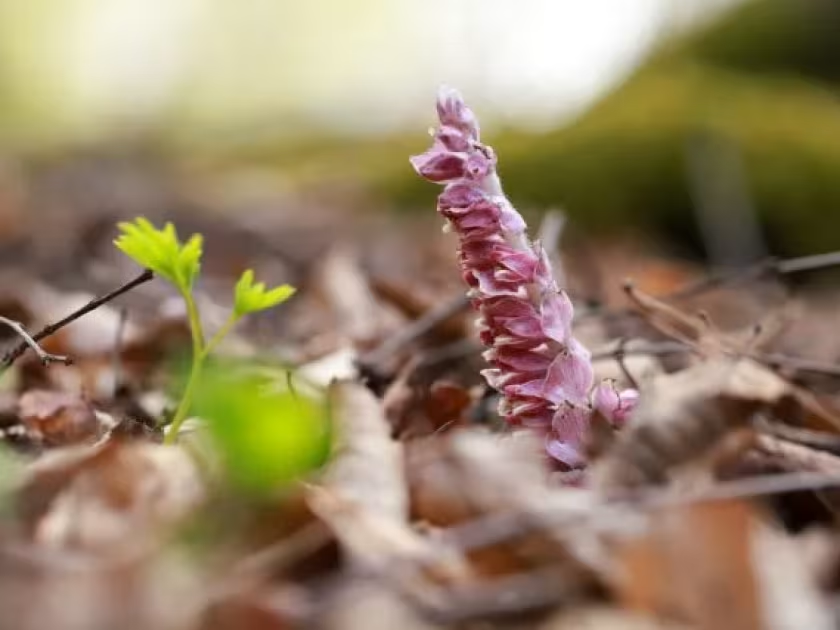
From a botanical perspective, the plant is characterized by its fleshly, underground rhizomes that spread through the soil. The vegetative part remains hidden until the flowering period when it produces distinct purplish-pink floral stalks that emerge above the forest floor to facilitate reproduction.
The plant requires highly specific environmental conditions to survive, including a stable supply of nutrients diverted from the host tree via specialized structures known as haustoria. It is sensitive to soil temperature fluctuations and relies on the microclimate of mature, dense woodland areas to remain healthy and viable.
Because it is a parasite, Lathraea rhodopea has no agricultural application or harvest potential. Its ecological value is strictly related to scientific interest in parasitic plant biology and the maintenance of diverse forest ecosystems where this rare species contributes to the complex web of forest biodiversity.