
Smooth goldfields
Lasthenia glabrata
Description
Sowing dates
Smooth goldfields are typically propagated through seeds sown directly in the field during the early spring. It is essential to ensure that the soil has sufficiently thawed and warmed up before planting.
The seeds are small and should be scattered over the surface of the soil rather than buried deeply. Lightly pressing them into the substrate helps ensure they stay in place and maintain contact with moisture.
Maintaining a consistent moisture level in the soil is crucial during the germination phase. Germination usually occurs within 10 to 14 days, provided the conditions are optimal.
When used in restoration ecology or landscaping, seeds can be broadcasted over prepared ground. This mimics natural reseeding patterns and encourages a more organic distribution of the plants.
Early sowing allows the plants to establish a strong root system before the onset of the summer heat, which is vital for long-lasting blooms and plant health.
Growing requirements
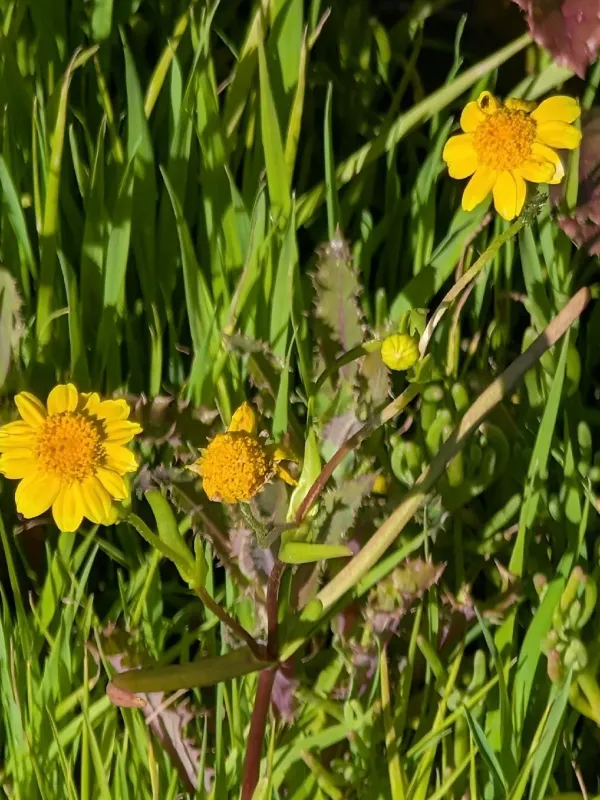
Lasthenia glabrata, commonly known as smooth goldfields, is an annual herb belonging to the Asteraceae family. It is native to the wetlands and grasslands of California.
The plant thrives in full sun exposure. It requires bright, unobstructed light to produce its characteristic golden-yellow flowers and to maintain a compact, healthy growth habit.
Regarding soil, it prefers fertile, well-drained loamy soils. While it is adaptable to various soil types, it performs best when the drainage is efficient, preventing moisture retention around the root collar.
Climate-wise, the species is well-adapted to Mediterranean-type climates with cool, moist winters and warm, dry springs. It can tolerate moderate periods of drought once the plants are fully established.
Beyond its aesthetic appeal in gardens, it serves as a critical food source for native pollinators, including various species of bees and butterflies, making it highly valued in ecological conservation.
Main diseases and pests
The main threats to the health of smooth goldfields include fungal diseases such as powdery mildew, which can manifest during periods of high humidity or poor air circulation.
Root rot is another significant concern, primarily triggered by overly saturated soils or poor drainage systems. This condition can rapidly degrade the health of an entire population of plants.
Common insect pests include aphids and mites, which can sap the vitality of the plant and cause leaf distortion. Regular scouting is recommended to keep pest populations below the economic threshold.
Implementing proper cultural practices, such as spacing plants adequately to ensure good airflow, is the most effective preventative measure against these threats.
In cases of severe infestation or disease outbreak, applying targeted treatments is necessary to protect the remaining plants and prevent the spread of the infection to adjacent areas.