
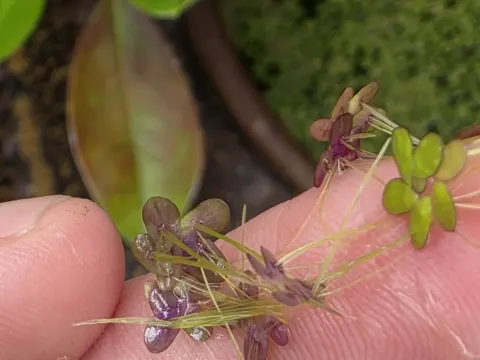
Landoltia
Landoltia Les & D. J. Crawford x Lemna L.
Landoltia (Landoltia punctata), a member of the Araceae family, is a floating aquatic plant known for its rapid vegetative growth. Unlike common duckweed, it exhibits structural and physiological characteristics that make it highly suitable for large-scale agricultural production.
What the section contains

Landoltia
Cultivation begins with the inoculation of water bodies or hydroponic systems with a healthy starter culture. The process is most effective when water temperatures stabilize between 18°C and 25°C, ensuring a rapid transition into the active growth phase.
The plant propagates via the budding of new thalli from the parent structure. Proper initial distribution of the starting material is essential to cover the water surface efficiently and prevent the development of invasive algae species.
In a controlled environment, the spacing of the inoculum should be uniform across the available area. Providing optimal conditions from the start allows the colony to reach the harvestable biomass density within a few weeks.
Ongoing management involves monitoring the surface coverage. Once the surface is fully covered, the plant enters its most productive phase, requiring constant observation to maintain an ideal population density for maximum yields.
Landoltia requires specific nutrient conditions, specifically high concentrations of nitrogen and phosphorus. Its ability to thrive in nutrient-rich water makes it an excellent candidate for wastewater treatment and nutrient recovery systems.
Temperature control is paramount for productivity. While it can survive at lower temperatures, the metabolic rate for doubling biomass peaks between 20°C and 30°C. Extremes must be avoided to prevent senescence or stunted growth.
The system requires stable pH levels, ideally ranging from 6.5 to 8.0. Proper water circulation is necessary to ensure that nutrients are distributed evenly and to prevent the development of temperature gradients on the water surface.
Lighting is another critical factor. While Landoltia can tolerate partial shade, high-intensity natural or artificial light significantly boosts photosynthetic activity and accelerates the overall production cycle.
Maintenance of the aquatic environment includes managing oxygen levels and preventing the buildup of organic waste, which could otherwise lead to anaerobic conditions harmful to the crop.
Landoltia is widely recognized for its high nutritional density, particularly its crude protein content, which can reach up to 40% of its dry matter. This makes it a sustainable alternative to conventional protein sources in feed formulations.
Under optimal conditions, the culture is incredibly prolific, capable of doubling its total biomass in as little as 2 to 4 days. This rapid growth cycle allows for frequent and consistent harvesting throughout the season.
The plant's amino acid profile is comparable to soybean meal, containing a balanced spectrum of essential nutrients. This nutritional value makes it an ideal feed supplement for poultry, swine, and aquaculture species.
Yield stability is dependent on regular harvesting to keep the plants in a young, active growth phase. If left unharvested for too long, the biomass becomes overcrowded, leading to self-shading and a reduction in photosynthetic efficiency.
Effective management of mineral inputs, particularly micro-nutrients like iron and magnesium, is necessary to sustain high yields and ensure the nutritional quality of the final product remains consistent.
Common threats to the crop include fungal and bacterial infections triggered by stagnant water and poor sanitary conditions. Maintaining water flow is the most effective preventative measure against such outbreaks.
Pests, including various aquatic insects and snails, can cause significant damage to the thalli. Biological control methods are preferred over chemical pesticides to preserve the quality and safety of the harvested biomass.
Viral infections can cause chlorosis and structural deformation. Strict quarantine procedures should be implemented when introducing new strains to the production system to prevent the spread of diseases.
Competition from unwanted aquatic plants and weeds can be a significant issue. Regular manual or mechanical removal of debris and competitor species is required to maintain the monoculture's integrity.
Overcrowding is a major operational threat. When the population density exceeds a certain threshold, the lack of light and nutrients causes the bottom layers of the colony to die and rot, polluting the water.
Harvesting is typically conducted using mechanical skimmers or sieve systems that lift the top layer of the plants from the surface. A portion of the population is always left behind to facilitate immediate re-growth.
The collected raw biomass has a high moisture content, usually exceeding 90%. Mechanical dewatering methods such as pressing or centrifugation are used to reduce water content before the drying stage.
Drying is a critical step in preserving the crop's nutritional value. Low-temperature convection dryers are recommended to prevent heat degradation of vitamins and proteins, which can occur at higher temperatures.
Proper storage involves keeping the dried product in cool, dry, and ventilated conditions to prevent moisture absorption and mold development. Quality-controlled packaging ensures long-term shelf stability.
Strategic harvesting schedules are crucial. By calculating the doubling time and harvest frequency, managers can optimize the throughput of the facility and maximize the total annual output of dry protein matter.