
Landoltia duckweed hybrid
Landoltia punctata (G. Mey.) Les & D. J. Crawford x Lemna minor L.
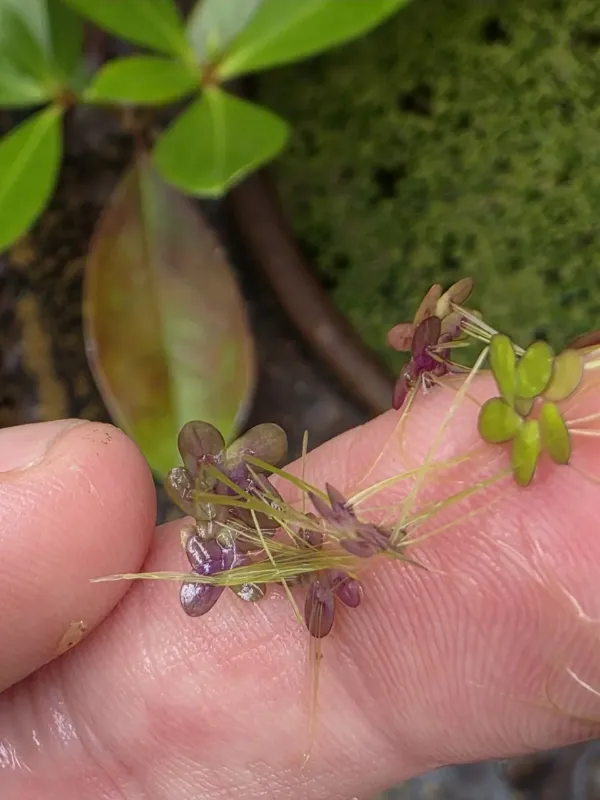
Description
Sowing dates
Landoltia duckweed hybrid is a rapidly growing aquatic plant that propagates primarily through vegetative budding in nutrient-rich water bodies.
Establishing a new crop involves introducing starter colonies into controlled aquatic environments during periods of stable, warm weather.
The rate of expansion is highly dependent on light availability, requiring open-water surfaces to achieve full photosynthetic potential.
Care must be taken to distribute the initial planting evenly to prevent localized overgrowth and ensure uniform coverage across the entire area.
In intensive production systems, colonies are often enclosed in floating frames to facilitate management and prevent unwanted drift.
Growing requirements
This crop thrives in water with high concentrations of dissolved nutrients, making it exceptionally efficient for wastewater treatment and nutrient recovery.
An optimal pH range of 6.5 to 7.5 is recommended to maintain plant vitality and promote maximum nutrient uptake from the water column.
Temperature management is critical, as growth rates peak when water temperatures stay consistently between 22 and 28 degrees Celsius.
Adequate sunlight is the primary driver of biomass accumulation, necessitating the placement of production facilities in sunny, unshaded locations.
Flow control is necessary to prevent physical damage to the plants and to ensure that nutrient concentrations remain balanced throughout the growth cycle.
Yield
Landoltia hybrid is characterized by its high-speed biomass production, capable of doubling its population in a matter of a few days under ideal conditions.
The annual dry matter yield per hectare significantly exceeds traditional land-based forage crops, providing a dense source of nutrients.
The biomass is rich in high-quality proteins and essential amino acids, making it a sustainable substitute for soybean meal in animal diets.
Regular harvesting encourages continuous growth and prevents senescence, ensuring a steady supply of high-protein feed for aquaculture operations.
Optimizing nutrient delivery systems can further increase yields, allowing for multiple harvests within a single growing season.
Main diseases and pests
Insect pests such as certain beetle species can cause significant damage to the leaf structures, reducing both the aesthetic and nutritional quality of the crop.
Fungal pathogens may emerge in stagnant or overcrowded conditions, leading to the localized decay and thinning of the floating mat.
Competition from invasive filamentous algae represents a serious threat, as these organisms can quickly dominate the surface and shade out the duckweed.
Chemical pollutants and high concentrations of heavy metals can be absorbed by the plants, rendering the biomass unsuitable for certain feed applications.
Severe environmental stressors, such as extreme cold or intense wind, can physically disrupt the delicate colonies and induce significant biomass loss.
Harvesting
Harvesting is typically achieved through mechanical skimming, using specialized nets or conveyor systems designed to lift the plant mat from the water surface.
Systematic harvesting is essential to prevent over-densification, which can deplete oxygen levels in the water and jeopardize the health of the entire crop.
Post-harvest processing involves thorough washing followed by mechanical dewatering to reduce the moisture content of the collected fresh biomass.
The resulting material is then dried or ensiled to create a shelf-stable product for use in livestock feed formulations or as an organic fertilizer.
Efficient logistics between the water site and processing unit are crucial to maintaining the high protein content of the fresh plant tissue.