
Slender deutzia
Deutzia gracilis Siebold & Zucc.
Description
Growing requirements
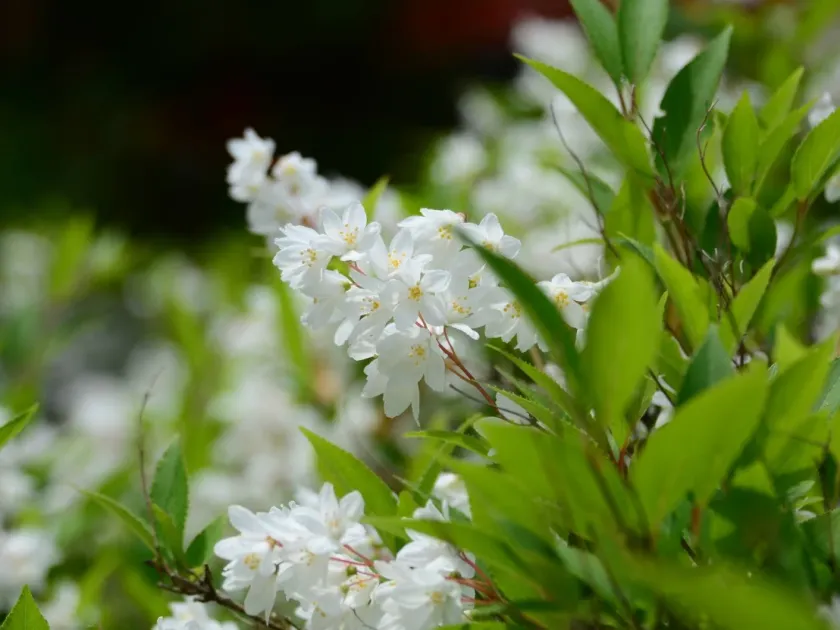
Slender deutzia (Deutzia gracilis) is a charming deciduous shrub belonging to the Hydrangeaceae family. Native to the mountainous regions of Japan, this plant has gained worldwide popularity as a garden ornamental due to its refined structure.
The botanical characteristics include thin, arching branches covered in lance-shaped leaves. During late spring, the shrub is enveloped in delicate, fragrant white flowers arranged in racemes, providing high aesthetic value in landscape design.
For optimal growth, the culture requires well-drained, fertile soil with a slightly acidic to neutral pH. It thrives in locations that provide plenty of morning sun but remain sheltered from harsh afternoon heat and strong winds.
Agricultural management requires consistent moisture levels during the growing season. While established plants are relatively hardy, supplemental irrigation is necessary during prolonged dry spells to maintain foliage and flower bud production.
In terms of usage, the slender deutzia is primarily utilized in horticultural landscaping. It serves effectively as a filler plant in shrub borders, a low-maintenance hedging component, or a focal point in cottage-style garden arrangements.
Main diseases and pests
Pest problems in Deutzia gracilis are relatively infrequent but can include aphids that target tender new shoots. Regular monitoring and the application of insecticidal soaps are usually sufficient to manage minor infestations effectively.
Fungal issues such as powdery mildew represent the primary pathological threat, especially in humid or poorly ventilated climates. Ensuring sufficient spacing between individual shrubs is critical to prevent the accumulation of moisture on the leaves.
Root rot is a physiological condition that occurs when the root zone remains waterlogged for extended periods. This can be mitigated by incorporating organic matter and sand into the planting hole to improve overall soil porosity.
Leaf-spot diseases may occur during wet summers, characterized by discolored lesions on the foliage. Pruning out infected stems and removing fallen debris from the base of the plant helps to reduce the inoculum load for the following season.
A proactive approach to health includes annual spring pruning, which removes dead wood and improves light penetration. Healthy, well-managed plants possess higher natural resistance against common pests and environmental stressors.