
Slender deutzia
Deutzia gracilis Siebold & Zucc. x Deutzia x rosea (Lemoine) Rehder
Description
Growing requirements
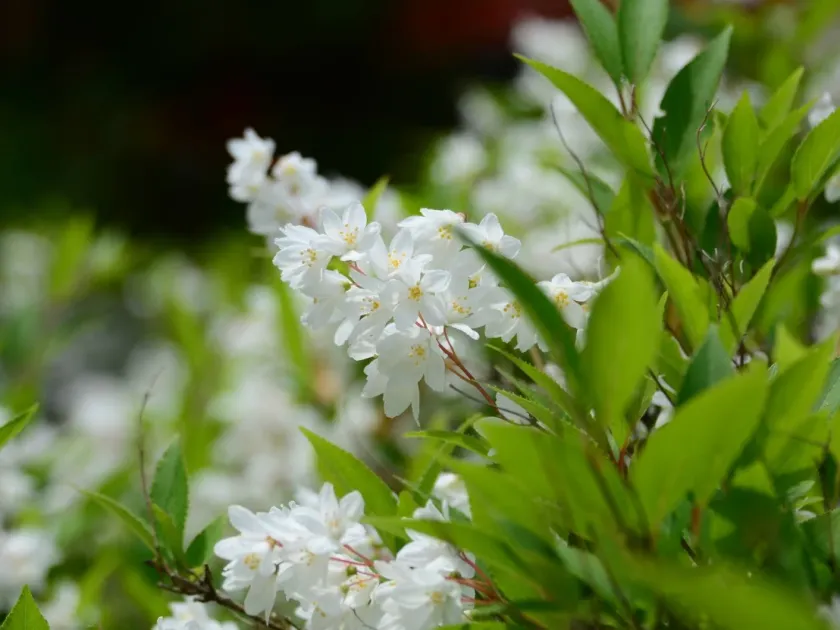
Slender deutzia is a charming deciduous shrub belonging to the Hydrangeaceae family. Native to Japan, it is widely prized by gardeners for its compact habit and abundant, snow-white flowers that drape along gracefully arching stems in spring.
The plant thrives in full sun to partial shade locations. While it is adaptable, it produces the most profuse blooms when grown in a spot that receives morning sun and is protected from harsh, drying afternoon winds or severe frosts.
Soil requirements focus on fertility, moisture retention, and excellent drainage. It performs best in well-drained, slightly acidic to neutral soils enriched with organic matter, such as compost or well-rotted manure, to support healthy root development.
Cultural practices should include regular mulching around the base to keep the soil cool and moist. During dry spells, supplemental irrigation is essential to prevent wilting and to ensure the plant remains vigorous throughout the growing season.
Pruning is a critical aspect of maintenance that should be performed immediately after the flowering period. By removing one-third of the older stems down to the ground, you encourage new growth, which ensures a dense, well-shaped plant.
Main diseases and pests
Slender deutzia is generally considered a low-maintenance plant; however, it can occasionally fall prey to aphids. These small pests usually cluster on young, tender shoots and can be managed with simple insecticidal soap applications.
Leaf spot diseases may appear during periods of high humidity or poor ventilation. To mitigate this risk, ensure proper spacing between shrubs to allow for adequate air circulation and avoid overhead watering that keeps foliage wet for too long.
Root rot is a significant threat if the shrub is planted in waterlogged soil. Always ensure the planting site is elevated or properly drained to protect the root system from the stress of anaerobic conditions caused by standing water.
Scale insects can sometimes be found on older branches. If an infestation is detected, physical removal of affected stems or targeted dormant oil sprays are effective methods to restore the health of the shrub.
Consistent observation of the foliage and stems is the best defense against pests and diseases. Early detection allows for prompt action, maintaining the plant's health and preserving its ornamental beauty for years to come.