
Fuzzy deutzia
Deutzia crenata Siebold & Zucc.
Description
Growing requirements
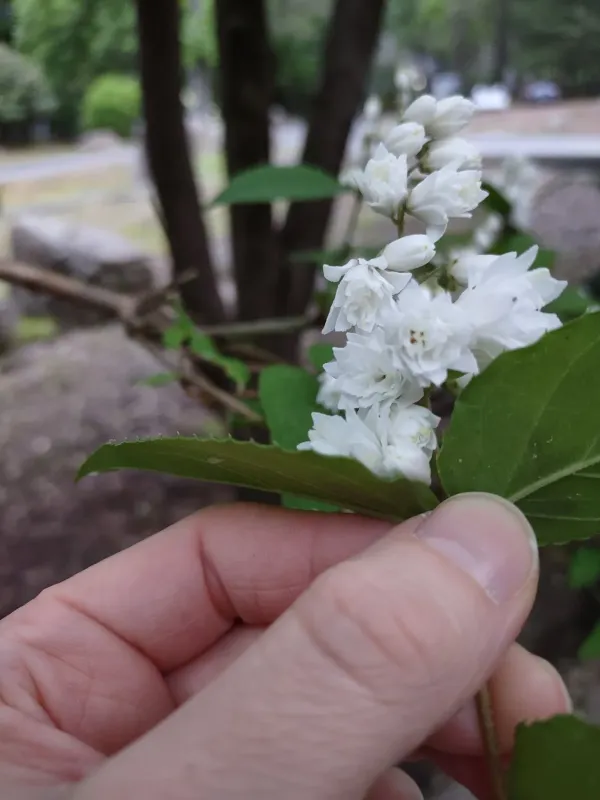
Fuzzy deutzia (Deutzia crenata) is an ornamental deciduous shrub belonging to the Hydrangeaceae family. Native to East Asia, including Japan and China, it has become a popular choice for gardens and parks worldwide due to its spectacular flowering.
Botanically, the plant is characterized by its upright habit, which can reach heights of 1.5 to 3 meters. The leaves are ovate with distinct serrated or 'crenate' margins, providing a lush green texture throughout the growing season.
The culture thrives best in locations with full sun to partial shade. Exposure to direct sunlight is generally preferred for optimal flower production, while protection from harsh winter winds helps prevent frost damage to the delicate branches.
Regarding soil requirements, this shrub favors fertile, moist, and well-drained loam. While it is somewhat adaptable, it performs poorly in compacted or waterlogged soils, which can lead to root decay and overall loss of vigor.
Standard agronomic practices include regular watering, especially during dry spells, and mulching the root zone to retain moisture. Annual pruning immediately following the flowering period is crucial to manage the shape and encourage new growth.
Main diseases and pests
Deutzia crenata is generally hardy but can occasionally fall victim to powdery mildew, especially during seasons with high humidity and stagnant air circulation.
Common pests that might affect the plant include aphids, which tend to congregate on young shoots, and spider mites that can damage leaf tissue under hot, dry conditions.
To maintain plant health, it is recommended to keep the area around the base clean and ensure the shrub is pruned sufficiently to allow sunlight and air to reach the center of the plant.
If an infestation occurs, horticultural oils or appropriate insecticidal soaps are usually effective in controlling aphid populations without causing harm to the environment.
In cases of fungal issues, the application of copper-based fungicides or other systemic treatments should be performed early in the season to prevent the disease from spreading throughout the landscape.