
Isaria
Isaria Pers.
Isaria (formerly known as Paecilomyces) is a genus of entomopathogenic fungi belonging to the family Cordycipitaceae. These fungi are widely recognized in agricultural science for their ability to parasitize and control populations of various insect pests and mites.
What the section contains

Isaria
The distribution of Isaria is global, naturally occurring in soils and organic debris across diverse ecosystems. These fungi play a vital ecological role by acting as natural checks on pest populations, contributing to the balance of biodiversity within agricultural landscapes.
Requirements for optimal performance of Isaria as a biocontrol agent include high levels of relative humidity, often exceeding 70 percent. The temperature range for the best efficacy of spore germination typically lies between 18 and 26 degrees Celsius, reflecting their biological adaptation to mild climates.
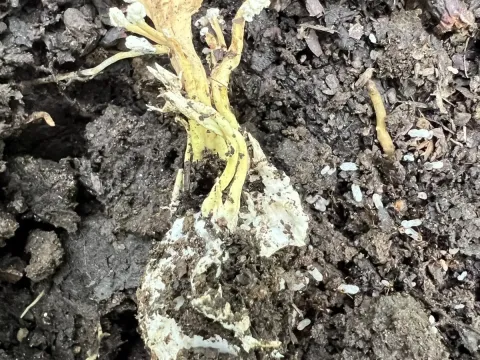
The botanical and physiological characteristics of Isaria involve the production of conidia that adhere to the host insect's cuticle. Upon germination, the fungus secretes specific enzymes and secondary metabolites, including beauvericin, which paralyze and kill the host, eventually covering the carcass with mycelium.
In modern farming, Isaria is utilized as the active ingredient in eco-friendly biopesticides. These products are specifically designed to be compatible with Integrated Pest Management (IPM) programs, providing a sustainable alternative to conventional synthetic insecticides while ensuring safety for beneficial insects and predators.
Environmental stressors such as desiccation caused by low humidity and direct exposure to UV light represent the most significant threats to the viability of Isaria spores. To mitigate these risks, field application is typically recommended during the early morning or evening hours to allow the fungus to establish successfully.
Although Isaria is highly effective, its application must be synchronized with chemical pesticide programs to avoid toxicity. The overuse of broad-spectrum fungicides can significantly inhibit the development of the fungal inoculum, thus reducing the overall efficacy of the biological control strategy in the field.