
Hyophorbe verschaffeltii
Hyophorbe verschaffeltii
Description
Growing requirements
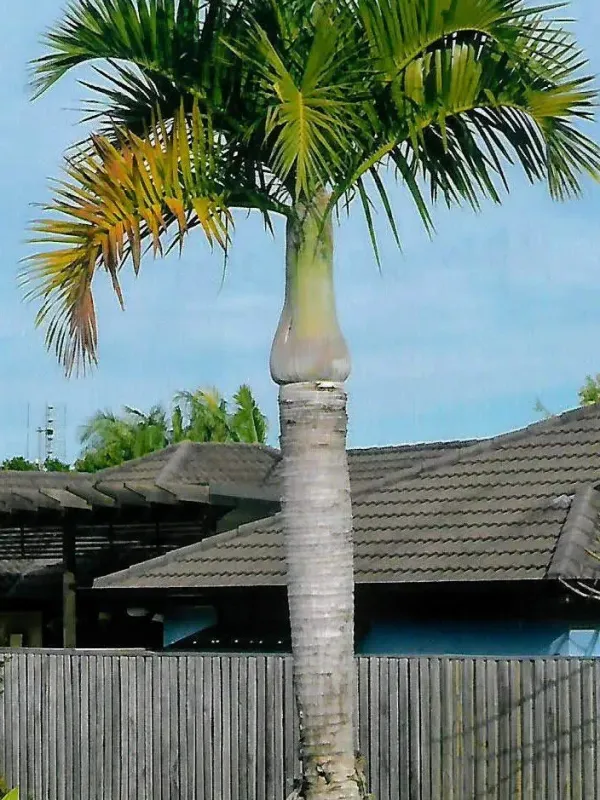
Hyophorbe verschaffeltii, commonly known as the spindle palm, belongs to the Arecaceae family. This distinctive palm species is native to the island of Rodrigues in Mauritius and is highly prized for its unique spindle-shaped trunk.
This crop thrives in tropical conditions, requiring high humidity and temperatures between 22 and 28 degrees Celsius. While it can tolerate minor fluctuations, it is sensitive to extreme cold and frost, which can cause irreparable damage.
Soil requirements involve a well-draining, nutrient-rich substrate. A mix consisting of peat, sand, and organic compost is ideal for promoting healthy root development while preventing waterlogging, which is a major risk factor.
- Requires bright, indirect sunlight for optimal growth.
- Needs regular feeding with palm-specific fertilizers.
- Demands consistent humidity levels.
Botanically, the palm is characterized by its stiff, pinnate leaves and a stem that swells in the middle, creating a striking architectural feature. Its slow growth rate makes it a popular candidate for indoor containers in milder climates.
Main diseases and pests
Spindle palms are susceptible to spider mite infestations, especially in low-humidity environments. These pests thrive in dry air, so misting the foliage regularly is a recommended preventive cultural practice.
Root rot is the most significant disease threat caused by overwatering or poor drainage. Once pathogens like Phytophthora colonize the root system, recovery becomes extremely difficult, necessitating preventive drainage management.
Scale insects and mealybugs can also infest the palm, feeding on plant sap. These pests are often found in the leaf axils, requiring mechanical cleaning or the application of horticultural oils for effective control.
Leaf spot fungi can develop if the foliage remains wet for extended periods in environments with poor air circulation. Ensuring adequate space between plants and promoting air movement helps to keep foliage dry and healthy.
Nutrient deficiencies, specifically magnesium and potassium, lead to characteristic yellowing or bronzing of the leaves. Implementing a balanced fertilization schedule is essential for maintaining the visual appeal of the palm.