
Bottle palm
Hyophorbe amaricaulis
Description
Growing requirements
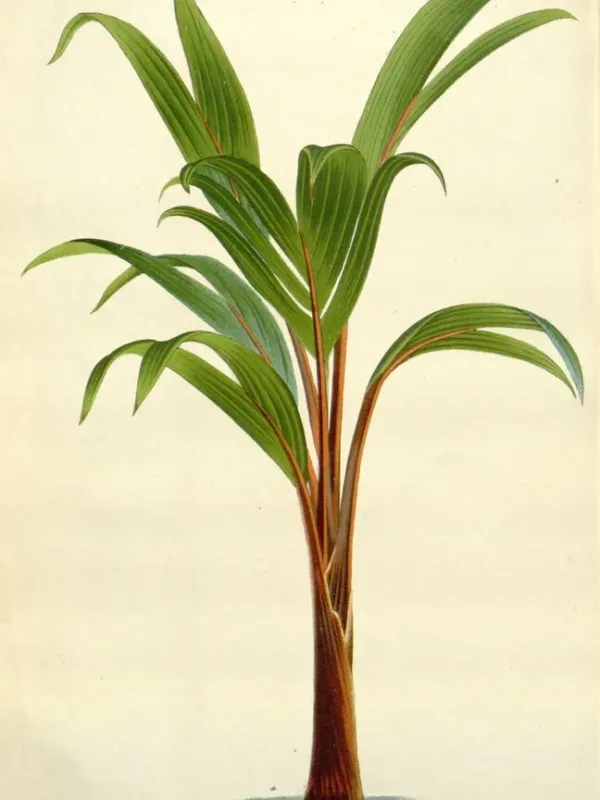
Hyophorbe amaricaulis, known as the bottle palm, belongs to the Arecaceae family. This species is an extremely rare endemic plant native to Rodrigues Island, where it is currently considered to be in a precarious conservation status.
The plant thrives in tropical conditions requiring consistently warm temperatures. It is highly sensitive to cold, and maintenance must occur in environments where temperatures do not drop below 15°C to avoid irreversible tissue damage.
Soil requirements are quite specific: the plant demands a well-draining, porous substrate. A mix consisting of peat, pine bark, and coarse sand provides the necessary structure to prevent root suffocation and waterlogging.
Regarding light, the species prefers bright, indirect sunlight. While it appreciates high light intensity, intense direct sun can scorch its leaves, especially in greenhouse conditions where ventilation might be limited.
Agronomic management relies on precise watering. The substrate should be allowed to dry slightly between waterings, but the root ball must never desiccate completely. During the growth phase, applying a balanced liquid fertilizer is essential for foliage health.
Main diseases and pests
The primary biological threats include fungal pathogens that target the root system. These often flourish when humidity is too high combined with stagnant air, making proper ventilation a crucial component of plant care.
Pests like spider mites are common, particularly when ambient humidity is insufficient. These pests can rapidly colonize the foliage, leading to a loss of vigor and stunted growth if not managed with regular misting or insecticidal soap.
Scale insects pose a persistent threat by attaching themselves to the stems and leaf bases. Their presence can often lead to the development of sooty mold, which impairs the plant's photosynthetic capability.
Mealybugs can also infest the plant, residing in protected areas such as leaf axils. If left untreated, they can cause significant stress, leaving the palm vulnerable to secondary bacterial infections.
Physiological disorders related to nutrition, such as potassium deficiency, often manifest as necrotic tips on older leaves. Maintaining a balanced nutrient supply and proper soil pH is vital for the long-term health of this endangered palm.