
Bottle Palm
Hyophorbe lagenicaulis
Description
Growing requirements
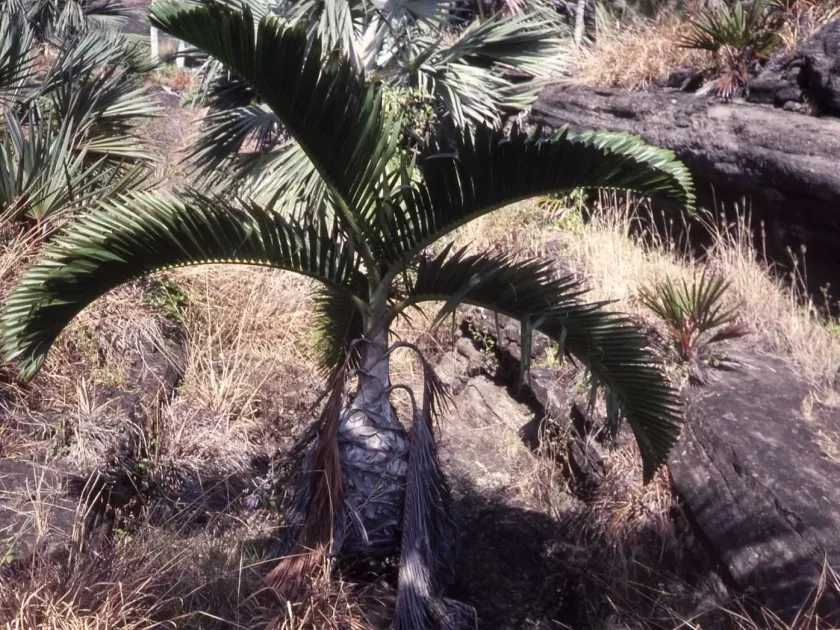
The Bottle Palm (Hyophorbe lagenicaulis) is an exotic palm species belonging to the Arecaceae family. Its common name is derived from the swollen, bottle-like shape of its trunk, which is an evolutionary adaptation for water storage in its native habitat.
Originally from the Mascarene Islands (Mauritius), this plant thrives in tropical environments. It requires high light intensity for optimal development, making it an excellent candidate for bright sunrooms or well-lit architectural spaces.
The plant demands a well-draining soil mix that prevents water accumulation near the roots. A blend of peat moss, perlite, and coarse bark is recommended to provide both moisture retention and aeration for the root system.
Temperature management is crucial: the plant is highly sensitive to frost and cold drafts. Ideally, the ambient temperature should remain consistently above 18°C, ensuring the soil warmth is also maintained throughout the growing season.
This palm is primarily used in landscaping and interior design for its striking ornamental value. Its slow growth rate makes it a long-term investment for plant collections, as it rarely reaches heights that require excessive pruning or management.
Main diseases and pests
Common pests include scale insects and spider mites, which can easily infest the fronds if the ambient humidity is too low. Regularly misting the plant or cleaning the leaves helps maintain plant health.
Root rot is the most frequent agricultural concern, usually caused by overwatering or poor drainage. It is imperative to allow the growing medium to dry out slightly between watering intervals to avoid fungal colonization.
Leaf spot diseases, caused by pathogens like Helminthosporium or Gloeosporium, can appear if the leaves stay wet for prolonged periods. Improving air circulation is the most effective preventative measure.
Nutrient deficiencies, specifically boron or magnesium, can present as distorted growth or yellowing leaves. Using a slow-release fertilizer specifically formulated for palms is the standard approach for proper maintenance.
To control infections, remove and destroy severely affected leaves immediately and apply appropriate fungicides or contact insecticides to limit the spread of the pathogens within the crop.