
Hylodesmum repandum
Hylodesmum repandum
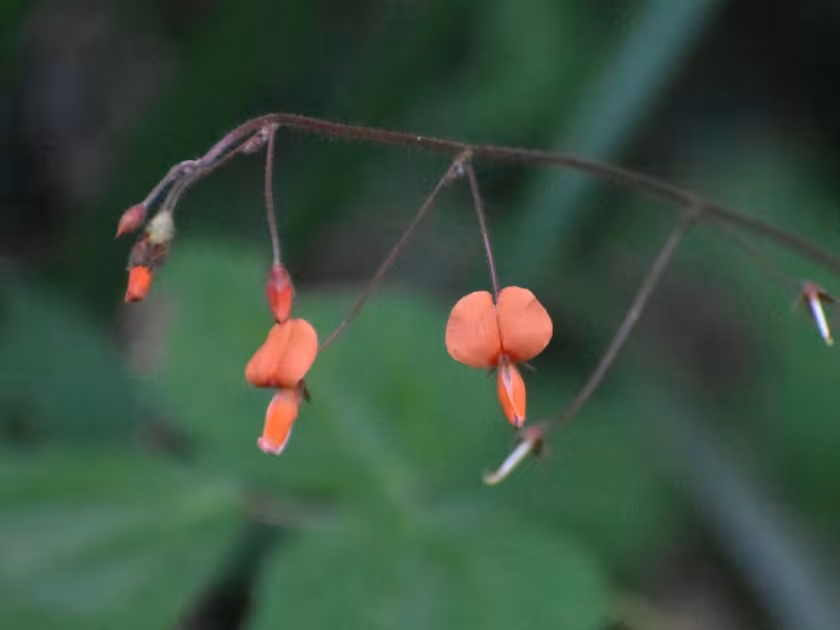
Description
Sowing dates
The propagation of Hylodesmum repandum in its native environment occurs mainly through seed dispersal, where the specialized pods attach to animal fur to travel long distances.
In agricultural practice, the seeds often require scarification to overcome the physical dormancy imposed by their hard seed coats, ensuring uniform germination.
The optimal sowing season begins after the onset of the warm, rainy period, as the seeds require soil temperatures above 18 degrees Celsius for active metabolism.
When cultivating this species, it is essential to ensure adequate spacing, as the plants exhibit a sprawling habit that can lead to overcrowding if not managed correctly.
Seeds should be sown at a shallow depth of approximately 1–2 centimeters, ensuring they remain protected while still having sufficient access to light for rapid emergence.
Growing requirements
Hylodesmum repandum is a member of the Fabaceae family, typically found as a perennial herb in the tropical regions of Africa and Asia.
This plant thrives in well-drained, fertile soil, preferring neutral to slightly acidic pH levels that support optimal nutrient uptake and nodule formation.
While the plant is somewhat drought-tolerant once established, consistent moisture is required during the active growth phase to maximize biomass production.
The plant requires high ambient temperatures and a frost-free environment throughout its growing season to develop fully and produce healthy fruit.
Providing a site with protection from strong winds is advisable to prevent physical damage to the sprawling stems and maintain the integrity of the canopy.
Yield
The economic value of this plant is largely centered on its potential as a forage crop, providing a nutrient-rich supplement for livestock in tropical climates.
Under favorable management, the crop can be harvested several times per year, provided that the timing of the cut allows for sufficient regrowth of the stems.
Yield capacity is significantly influenced by soil nutrient levels, particularly phosphorus and potassium availability, which enhance the plant's structural development.
As a legume, it serves an excellent role in crop rotation systems by enhancing soil fertility through atmospheric nitrogen fixation via root nodules.
Farmers can expect stable biomass yields if weeds are controlled during the early stages of establishment, allowing the crop to dominate the targeted area.
Main diseases and pests
Pest pressure is primarily driven by leaf-chewing insects and various caterpillars that find the foliage particularly attractive during humid growth periods.
Fungal pathogens such as mildew can occur in dense stands where air circulation is poor, necessitating regular inspection to prevent the spread of infection.
Root rot is a major risk factor if the field suffers from waterlogging, which often results in severe yield loss and plant mortality in poorly drained areas.
Integrated Pest Management (IPM) strategies, including the use of biological controls, are highly recommended to keep pest populations below the economic injury level.
Maintaining crop hygiene by removing infected residue at the end of the harvest cycle is critical for preventing the carry-over of pathogens into the next season.