
Aruncus hybrid
Hybrids between Aruncus dioicus (Walter) Fernald and Aruncus aethusifolius (H. Lév.) Nakai
Description
Growing requirements
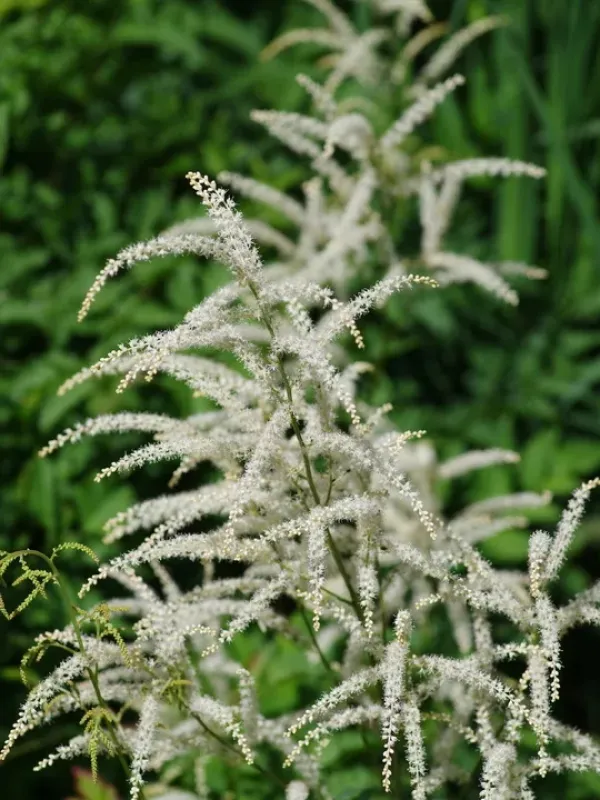
Aruncus hybrids (Aruncus dioicus × A. aethusifolius) are perennial herbaceous plants belonging to the Rosaceae family. These cultivars are prized by gardeners for their refined fern-like foliage and dramatic, plume-like inflorescences that appear in early summer.
The plant thrives in partial to full shade, making it an excellent choice for woodland gardens or north-facing borders. It requires protection from the harsh afternoon sun, which can scorch the delicate leaves and cause premature browning.
Optimal soil conditions include fertile, humus-rich, and moisture-retentive substrate. While the hybrid prefers consistent moisture, it is essential that the soil is well-draining to prevent root rot, especially during dormant winter months.
Cultural practices focus primarily on maintaining soil hydration. Mulching the base of the plant with organic compost helps retain moisture and provides the necessary nutrients for vigorous growth and long-term vitality.
In landscaping, these hybrids serve as structural elements in shade borders, mass plantings, or as focal points near water features. Their graceful, arching habit adds a sense of lightness and elegance to any horticultural design.
Main diseases and pests
The primary disease threat for Aruncus is powdery mildew, which manifests as a white, dusty film on the surface of the leaves. This usually occurs when humidity levels fluctuate or if the plant lacks sufficient air circulation.
In terms of pests, aphids are the most common concern. These insects feed on the succulent growth of the plant in late spring; while rarely fatal, their presence can reduce the overall health and aesthetics of the plumes.
Root rot caused by persistent waterlogging is a critical issue that can kill the plant quickly. Ensuring the site is properly graded and amended with organic matter is the most effective preventative strategy.
Spider mites may become problematic during periods of intense heat and low atmospheric humidity. Periodic rinsing of the foliage with water can help keep mite populations in check and refresh the plant.
General garden sanitation, including the removal of dead foliage at the end of the season, helps reduce the overwintering potential of pathogens and pests, ensuring a healthy start for the following spring.