
Korean goat's beard
Aruncus aethusifolius (H. Lév.) Nakai
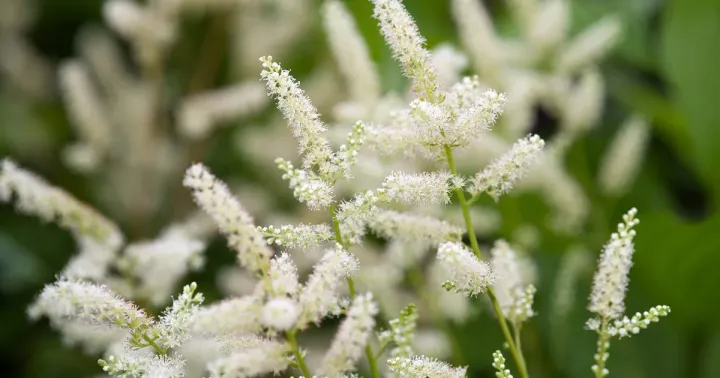
Description
Sowing dates
Propagation of the Korean goat's beard is most efficiently achieved through the division of mature clumps during the early spring or autumn dormant periods.
When growing from seeds, it is essential to provide a cold stratification period to break dormancy, which is best achieved by sowing outdoors in late autumn.
Seedlings develop slowly, requiring a consistent environment with moderate moisture and protection from harsh weather conditions during their first growth season.
The planting site should be enriched with organic matter, such as compost or well-rotted leaf mold, to provide the nutrients necessary for healthy root establishment.
Spacing should be managed to ensure that each plant has sufficient room to reach its mature size, promoting good air circulation and reducing disease potential.
Growing requirements
Aruncus aethusifolius, belonging to the Rosaceae family, is a compact perennial native to the mountainous regions of Korea and East Asia.
This species thrives in partial shade or dappled sunlight, making it an excellent candidate for woodland gardens or north-facing landscape borders.
The plant requires deep, moisture-retentive, and humus-rich soil; it performs poorly in dry, sandy soils unless strictly monitored and irrigated.
It displays high winter hardiness, making it suitable for a wide range of temperate climates where it can endure cold winters under a dormant state.
Mulching the base of the plant with shredded bark or compost is recommended to keep the roots cool, suppress weeds, and maintain soil moisture levels throughout the summer.
Main diseases and pests
While the Korean goat's beard is generally robust and disease-resistant, it can occasionally be affected by common fungal issues like leaf spot or powdery mildew.
These fungal infections are primarily encouraged by high humidity and poor air circulation around the foliage, especially in dense or overcrowded garden plantings.
Garden pests, most notably slugs and snails, find the young foliage particularly attractive, especially during wet spring months when the plants are just emerging.
Preventative care involves ensuring that the plants are not overwatered and that the surrounding area is kept clean of rotting organic debris where pests might hide.
In cases of severe infestation or disease pressure, the use of appropriate biological or chemical controls may be necessary, provided they are applied according to safety labels.