
Aruncus hybrida
Aruncus hybr.
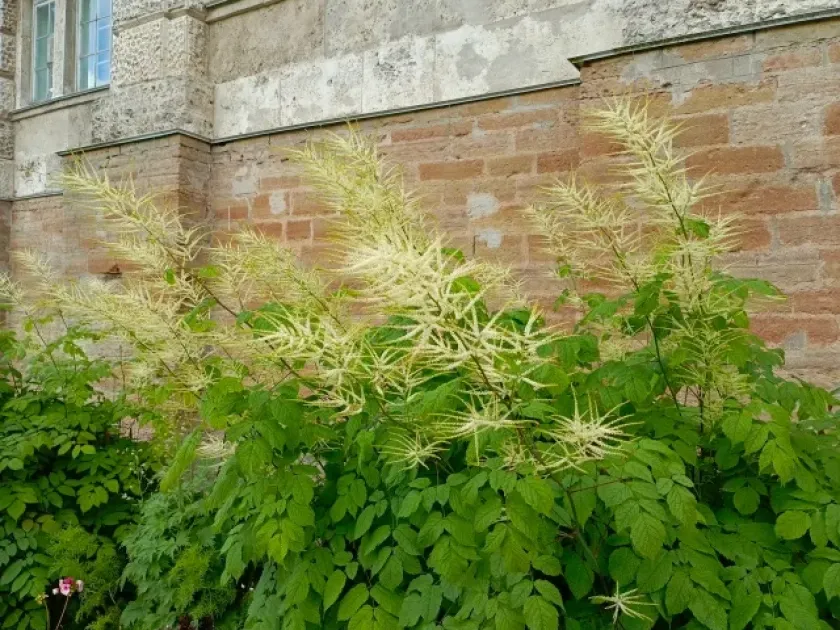
Description
Sowing dates
Propagation of Aruncus hybrida is primarily achieved through division of the root clump, which is the most reliable method for maintaining the desired horticultural characteristics. This procedure should be performed during the early spring or late autumn when the plant is in a dormant state.
Seed propagation is also possible, though it requires patience due to a slow germination process. Seeds should be sown in late autumn to allow for natural cold stratification during the winter months, or sown in a cold frame to protect them from extreme elements.
When sowing, the seeds are placed on the surface of the soil and only very lightly covered with a fine layer of substrate. Maintaining high humidity is essential for successful germination, so the soil surface should never be allowed to dry out completely.
Once established, the plants should be spaced at least 80 to 100 centimeters apart. This spacing is vital for the plant to reach its full potential size without competing for nutrients, and it ensures that air flows freely between the mature foliage of neighboring plants.
It is important to plant the crown of the root at the correct depth. Positioning it too deeply can lead to crown rot, while planting it too shallowly might result in the roots drying out prematurely during the heat of the summer season.
Growing requirements
Aruncus hybrida is a robust perennial member of the Rosaceae family, prized for its large, feathery panicles of white flowers and lush, fern-like foliage. It is a perfect choice for adding structure and elegance to shaded areas of the garden.
The plant thrives in partial to full shade conditions. While it can tolerate some morning sunlight in cooler climates, it must be protected from the harsh, direct afternoon rays which can scorch the leaves and significantly reduce the visual impact of the display.
Soil requirements include rich, deep, and consistently moist soil. A loamy structure is ideal, and the addition of well-rotted compost or leaf mold helps to improve fertility and moisture retention, which are essential for this plant's long-term health.
Water management is the most critical aspect of the plant's maintenance regimen. During dry spells, regular and deep irrigation is necessary to keep the soil consistently damp; otherwise, the foliage will lose its turgidity and the flowers may wilt prematurely.
Maintenance is relatively straightforward: mulch the base of the plant annually with organic material to suppress weeds and conserve moisture. As winter approaches, the entire top growth should be cut back close to the ground to prepare the plant for its dormant season.
Main diseases and pests
Aruncus hybrida is generally quite resilient, but it can be susceptible to root rot if grown in heavy, waterlogged soil. Proper drainage is therefore the most important preventative measure for maintaining the long-term health of the root system.
Pests are rarely a major issue, but in very dry environments, spider mites can occasionally settle on the underside of the leaves. These pests feed on plant juices, which can lead to yellowing of the foliage and a overall decline in the plant's vigor.
Should pest infestations occur, they can be managed with insecticidal soaps or specific acaricides. It is best to treat the foliage early in the season to prevent the population from becoming well-established and causing significant aesthetic damage.
Fungal leaf spot diseases can occur during prolonged periods of high humidity and poor air circulation. To minimize this risk, it is important to provide sufficient spacing between plants and avoid overhead watering that keeps the foliage wet for too long.
General plant vigor is the best defense against pests and diseases. By providing the plant with the right light, consistent moisture, and occasional fertilization with a balanced, slow-release fertilizer, you will ensure a healthy, robust specimen for many years.