
Hulsea vestita
Hulsea vestita
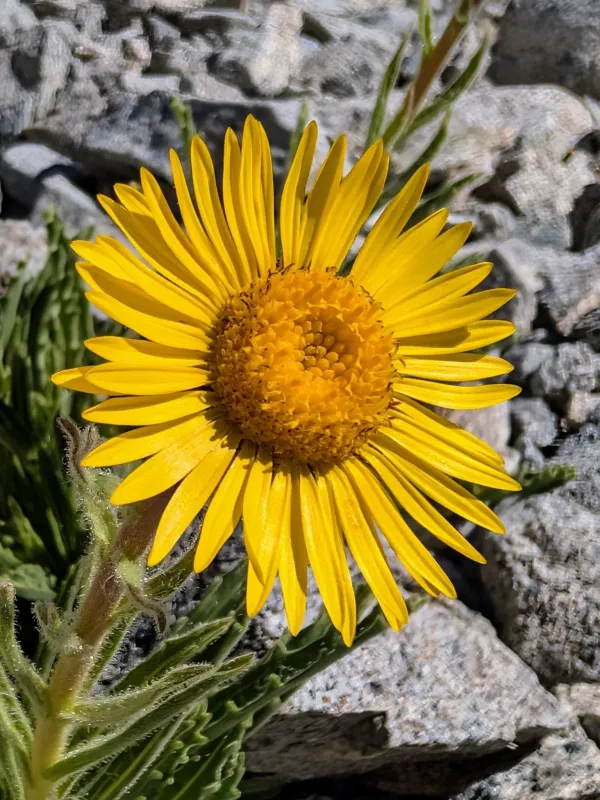
Description
Sowing dates
Hulsea vestita is a perennial wildflower primarily reproduced through seeds in its native montane habitats of the Western United States.
For cultivation purposes, seeds should be sown in the autumn season to allow for cold stratification, which is crucial for breaking dormancy.
The planting depth should be shallow, as the seeds benefit from light exposure, ensuring optimal germination rates in a light substrate.
When grown in nursery conditions, it is essential to mimic mountain climates by providing a cool, stable environment for early development.
Successful propagation relies on high-quality, fresh seeds and a well-draining sowing medium that prevents the seeds from rotting.
Growing requirements
Hulsea vestita belongs to the Asteraceae family and is native to the high-altitude regions of California and neighboring areas.
The plant thrives in sandy or rocky soils with excellent drainage, which is a critical factor for its survival and overall health.
Full solar exposure is mandatory for this species, as it is naturally adapted to the high UV levels found in subalpine environments.
It prefers a climate characterized by diurnal temperature fluctuations, meaning it requires warm days and significantly cooler nights.
Low humidity levels are beneficial, as the plant has evolved in semi-arid zones where atmospheric moisture remains relatively low.
Yield
While Hulsea vestita is not a commercial agricultural crop, its production is centered on conservation efforts and ornamental gardening.
The yield of this plant is measured by its success in botanical restoration projects and the successful germination of viable seeds in greenhouses.
In a controlled environment, a single mature plant can produce a considerable amount of seed, contributing to local biodiversity.
Ornamental potential is high, as the species produces striking flowers that can be utilized in rock gardens or specialized drought-tolerant landscapes.
The plant is highly valued for its aesthetic contribution to wild habitats rather than for mass-scale industrial agricultural output.
Main diseases and pests
The primary threats to this plant are root rot and fungal pathogens, which frequently arise when the soil remains waterlogged for long periods.
Sucking insects, including aphids, represent a common challenge as they tend to target the tender tissues of the flower buds and young shoots.
Spider mites can become an issue during hot, dry spells, potentially weakening the plant and reducing its overall vigor throughout the season.
Excessive humidity in the plant canopy often leads to foliage disease, making proper air circulation a vital management practice.
Mechanical damage to the delicate root system should be avoided at all costs during any necessary transplanting or weeding operations.