
Hulsea californica
Hulsea californica
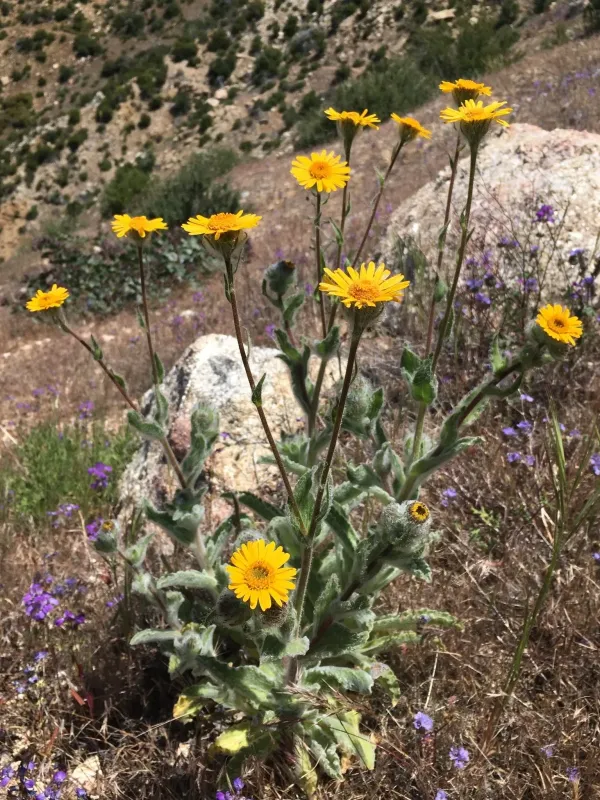
Description
Growing requirements
Hulsea californica, commonly known as the San Diego sunflower, is a perennial herbaceous plant belonging to the Asteraceae family. It is native to the coastal sage scrub habitats of Southern California and northern Baja California.
The plant features a basal rosette of leaves and produces upright, branched flowering stems. These stems support large, showy yellow composite flower heads that bloom during the late spring and early summer.
This species is highly adapted to nutrient-poor, well-draining sandy or rocky soils. It thrives in open areas with full sun exposure and is considered an excellent candidate for xeriscaping and rock gardens.
Cultivation requires minimal intervention. The plant is drought-tolerant once established and does not tolerate persistent dampness or heavy, clay-based soils that retain too much moisture during the colder seasons.
Proper airflow is essential for the health of Hulsea californica. In a garden setting, it should be placed in locations where it will not be crowded by faster-growing or more aggressive vegetation.
Main diseases and pests
Root rot is the most significant threat to this species in cultivation. It is almost always a result of poor soil drainage or excessive irrigation during the dormant period.
Aphids and spider mites are common pests that may infest the foliage. Monitoring the undersides of the leaves during the early growing season is recommended to detect early signs of damage.
The application of coarse gravel or volcanic rock mulch around the base of the plant is a critical cultural practice. This keeps the crown dry and reduces the risk of fungal pathogens.
Over-fertilization should be strictly avoided. Excess nitrogen can lead to rapid, weak growth that becomes more susceptible to environmental stresses and pest attacks.
If fungal disease symptoms such as wilting or brown spotting appear, immediate improvement of drainage and removal of infected tissue are the most effective management strategies.