
Dwarf Alpine Gold
Hulsea nana
Description
Growing requirements
Hulsea nana, commonly known as Dwarf Alpine Gold, is a hardy perennial belonging to the Asteraceae family. This species is native to the high-elevation mountain ranges of the Western United States, where it thrives in harsh, rocky environments.
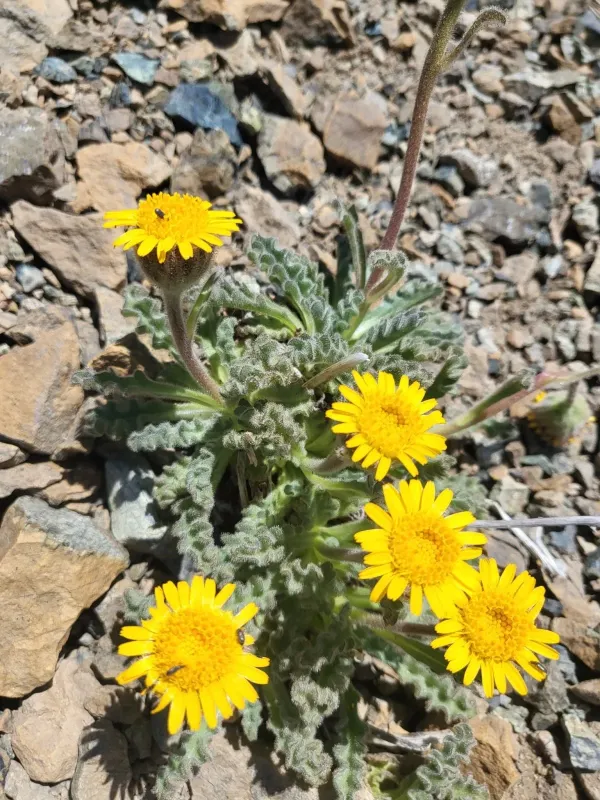
Botanically, the plant is characterized by its cushion-forming growth habit and glandular, hairy foliage. These features are evolutionary adaptations designed to retain moisture and survive the intense solar radiation encountered at high altitudes.
The cultivation of this plant requires specific soil conditions, specifically focusing on extreme drainage. It is best suited to coarse, gravelly, or sandy soils that mimic the scree slopes of its natural habitat, preventing any possibility of moisture stagnation near the crown.
Regarding climate, the plant requires a long dormant period under snow cover to trigger spring growth. It is highly sensitive to the humidity and fluctuations associated with lower altitudes, making it a specialized crop for cool, temperate, or high-mountain garden environments.
Proper agronomic management involves avoiding any over-fertilization or excessive irrigation. The plant has evolved to extract nutrients from skeletal soils; therefore, supplemental feeding is generally unnecessary and can negatively impact the plant’s natural compactness and health.