
Hulsea algida
Hulsea algida
Description
Growing requirements
Hulsea algida, commonly known as alpine gold, is a perennial herbaceous plant belonging to the Asteraceae family. It is considered a specialized wild species rather than an agricultural crop, adapted specifically to high-altitude environments.
The plant is native to the high mountain ranges of the Sierra Nevada in California, USA. It thrives in subalpine and alpine zones, where the environment is characterized by short growing seasons, thin air, and highly variable weather conditions.
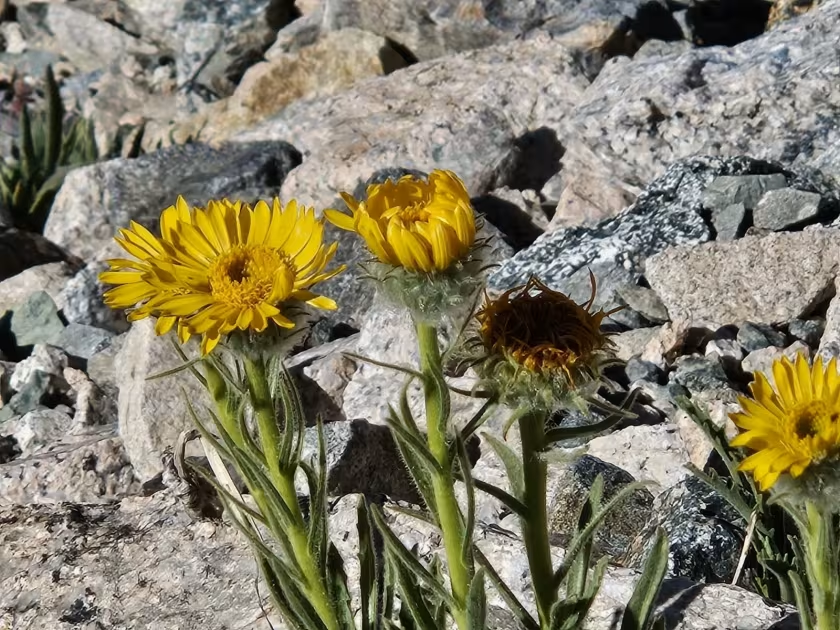
Botanically, it is identified by its distinct glandular-pubescent foliage and vibrant yellow daisy-like flower heads. The plant develops a dense rosette of leaves close to the ground, which provides protection against harsh wind and helps in temperature regulation.
Regarding soil and climate, it requires rocky, well-draining substrates with very low nutrient content. It is extremely sensitive to moisture retention and soil fertilization, as it has evolved to thrive in mineral-poor alpine soils under intense sunlight.
The economic use of this plant is minimal, restricted primarily to academic study and conservation efforts within its native range. There are no agricultural cultivation protocols, as the plant relies on specific ecological niches that are difficult to replicate in controlled environments.