
Horsfieldia wallichii
Horsfieldia wallichii
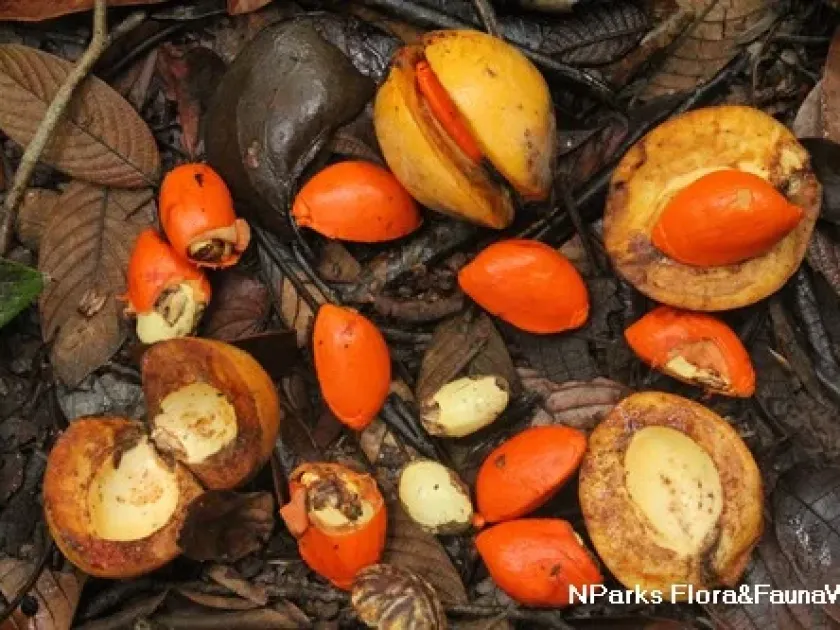
Description
Sowing dates
Horsfieldia wallichii belongs to the Myristicaceae family and is native to the tropical evergreen forests of Southeast Asia.
Propagation is primarily through seeds, which are highly recalcitrant and must be sown immediately after collection to maintain viability.
Nursery practices involve planting seeds in specialized containers filled with a lightweight, well-draining organic medium.
Seedlings require a protected environment with diffused light during their initial development phase to prevent heat stress and desiccation.
Transplanting into the field is recommended at the onset of the monsoon season to ensure sufficient moisture for root establishment.
Growing requirements
This species demands a tropical climate with high annual rainfall and consistently warm temperatures throughout the year.
Deep, fertile, and well-drained loamy soils are ideal for supporting the long-term growth and structural stability of these trees.
The tree thrives in shaded or semi-shaded environments, particularly during its sapling stage, mimicking its natural understory habitat.
Adequate spacing, typically 5 to 8 meters apart, is necessary to prevent competition for light and nutrients as the canopy matures.
Soil nutrient management, although often naturally occurring in forest environments, can be supplemented in nurseries with balanced organic fertilizers.
Yield
The economic value of Horsfieldia wallichii is derived from its timber, which is utilized for light construction and packaging materials.
Growth rates are moderate, and high-quality timber yield is achieved only through sustainable forest management practices over extended periods.
Sustainable harvesting techniques, such as selective thinning, are preferred to maintain the ecological integrity of the stand.
Beyond timber, the species contributes to the maintenance of soil structure and the support of local forest ecosystems.
While not a primary commercial crop, its inclusion in agroforestry systems adds value through biodiversity and resource diversification.
Main diseases and pests
Young seedlings are frequently threatened by damping-off diseases caused by fungi thriving in excessively humid nursery conditions.
Mature trees may be susceptible to wood-boring insects, which can compromise the quality of the timber if infestation levels are high.
Aggressive weed competition often threatens the survival of young transplants, requiring systematic manual clearing during the first few years.
Sanitation practices, such as removing infected debris, are the most effective way to manage disease pressure in a plantation setting.
Integrated Pest Management (IPM) strategies are recommended to minimize environmental impacts while effectively controlling localized pest outbreaks.