
Horsfieldia irya
Horsfieldia irya
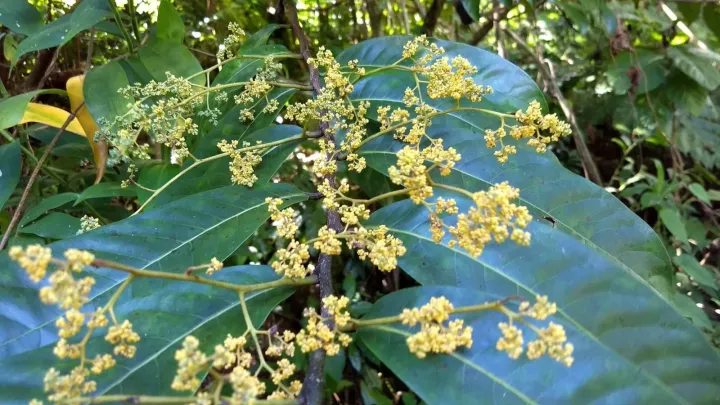
Description
Growing requirements
Horsfieldia irya is a large, evergreen tree belonging to the Myristicaceae family. It is native to the tropical rain forests of Southeast Asia, where it thrives in lowland forests and along river banks, serving as an important component of the local vegetation.
The tree requires a tropical climate characterized by consistently high temperatures and significant rainfall throughout the year. It does not tolerate prolonged dry seasons and performs best in environments with high atmospheric humidity.
Regarding soil requirements, Horsfieldia irya prefers deep, moist, and well-drained alluvial soils. Its ability to tolerate periodically waterlogged conditions makes it highly specialized for riparian habitats and flood-prone landscapes.
Botanically, the species is recognized by its dense canopy and robust trunk. The plant relies on successful seed dispersal by local fauna, which is a critical aspect of its natural life cycle and regeneration in the wild forest canopy.
From an agricultural and economic perspective, the timber of Horsfieldia irya is utilized for various construction purposes. Beyond its wood, the tree plays a vital role in forest conservation and provides essential food resources for many tropical bird species.
Main diseases and pests
Like many species in the Myristicaceae family, Horsfieldia irya is susceptible to fungal infections that thrive in the persistent humidity of the tropical environment, often affecting the foliage and bark.
Pests such as stem-boring beetles present a constant threat, as they can cause significant damage to the xylem and phloem, potentially weakening the structural integrity of the mature trees.
Environmental degradation, including deforestation and the drainage of wetlands, is the primary threat to the natural distribution and long-term survival of this species in its native range.
Increased human activity in forest areas can lead to the introduction of invasive pathogens, which can exacerbate the vulnerability of the trees during their most active growth stages.
Effective management strategies include site monitoring and the preservation of natural forest corridors to maintain healthy genetic diversity and minimize the impact of regional disease outbreaks.