
Horsfieldia angularis
Horsfieldia angularis
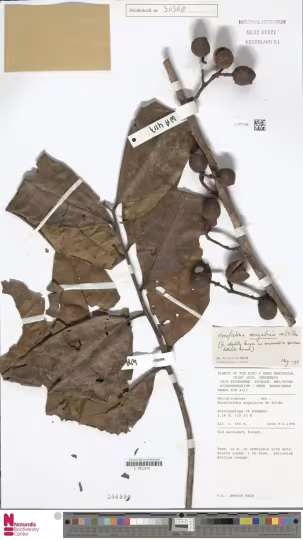
Description
Growing requirements
Horsfieldia angularis is a botanical species belonging to the Myristicaceae family. This tree is native to the tropical forests of Southeast Asia, where it thrives in diverse forest ecosystems.
The crop demands a humid tropical climate with consistent temperatures throughout the year. It does not tolerate prolonged exposure to frost or extremely arid atmospheric conditions.
Soil requirements focus on deep, nutrient-rich substrates with excellent drainage properties. Horsfieldia species are known to be sensitive to waterlogged soils which can lead to root rot.
Standard agrotechnical practices involve careful site selection that mimics the natural forest structure, providing sufficient canopy protection for young saplings against direct sun.
Soil management includes the application of organic mulch to maintain moisture levels and enhance the overall fertility of the growing area during the primary growth cycle.
Harvesting
The primary economic value of the species lies in its wood, which is utilized for light construction and interior woodworking within its native range of distribution.
Harvesting of the fruits and seeds requires manual labor to ensure that only fully mature samples are collected, preventing the mixture of immature materials in the supply chain.
Post-harvest processing involves separating seeds from the fleshy fruit coating, followed by controlled drying to reduce moisture content to levels suitable for storage.
Timber harvest follows strict forestry management principles, ensuring the sustainable rotation of trees to maintain long-term production and ecological stability of the forest plot.
Quality control during storage is vital, as the seeds and wood can be susceptible to fungal degradation if stored in environments with inadequate ventilation or high humidity levels.