
Horsfieldia parviflora
Horsfieldia parviflora
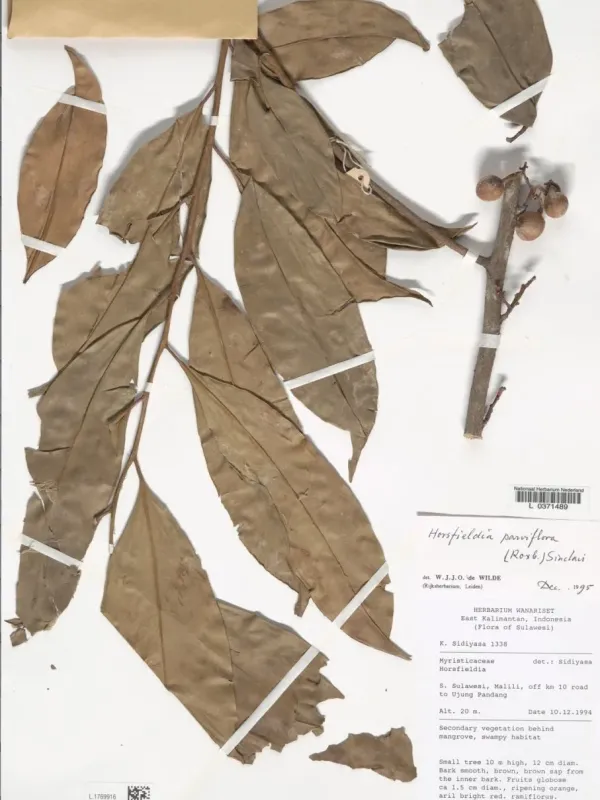
Description
Growing requirements
Horsfieldia parviflora belongs to the Myristicaceae family. It is a large, evergreen tree species native to the tropical ecosystems of Southeast Asia, including regions like Malaysia and Indonesia.
This species thrives in lowland rainforest environments characterized by consistent high humidity and warm temperatures throughout the year, without distinct dry seasons.
The tree requires well-drained, nutrient-rich soil to support its growth. While it prefers moist conditions, it is sensitive to waterlogging, which can damage its root system.
Botanically, it is identified by its small flowers and dense foliage, which provide canopy cover in its native habitat. It plays an important role in the ecological succession of tropical forests.
Economically, it is appreciated locally for its timber, which is used in construction, and for its contribution to maintaining the integrity of forest microclimates.
Main diseases and pests
The primary threats to Horsfieldia parviflora include deforestation and land conversion, which directly destroy the tree's natural habitat and fragmentation of populations.
Root rot pathogens represent a significant biological threat, particularly in soils where natural drainage has been disrupted or compromised by human activity.
Wood-boring insects are known pests that attack the trunk and branches of the tree, potentially leading to timber degradation and reduced physiological vigor.
Environmental stress, including erratic rainfall patterns due to climate change, can weaken the trees and make them more susceptible to opportunistic fungal infections.
Conservation strategies focus on protecting these trees within forest reserves to prevent the loss of genetic diversity and ensure the survival of the species.