
Hornungia procumbens
Hornungia procumbens
Description
Sowing dates
The germination of Hornungia procumbens occurs primarily in early spring when soil temperatures range between 5 and 10 degrees Celsius.
The seeds are small and possess a high ability for dormancy, allowing them to remain viable in the soil seed bank for several years until favorable conditions arise.
Optimal germination requires surface contact with light, meaning that burial at significant depths drastically reduces the emergence rate of the seedlings.
Agricultural practices such as shallow cultivation or harrowing help in managing the seedling emergence by disturbing the upper soil layer before primary crop sowing.
The life cycle is relatively short, often allowing the plant to complete its reproductive phase before the peak summer heat arrives in many regions.
Growing requirements
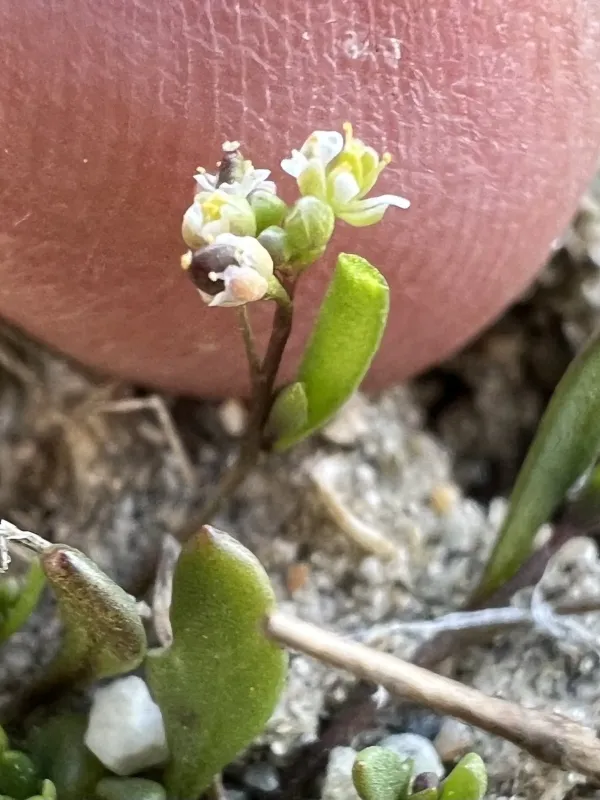
Hornungia procumbens, commonly known as procumbent saltmarsh-cress, is an annual plant belonging to the Brassicaceae family. It is recognized for its adaptation to diverse environments.
The plant typically inhabits sandy soils, coastal salt marshes, and disturbed agricultural lands. It thrives in open, sunny locations where competition from taller vegetation is limited.
Botanically, it features a small, spreading habit with divided leaves and small white flowers. Its compact structure allows it to survive in exposed areas with high wind levels.
It prefers alkaline or neutral soil conditions and exhibits a remarkable tolerance for soil salinity, which is a key characteristic of its natural habitat distribution.
In terms of moisture, the plant requires moderate levels during its early growth stages but shows resilience during the subsequent dry phases of its life cycle.
Main diseases and pests
As a member of the Brassicaceae family, Hornungia procumbens acts as an alternative host for several diseases that affect major crops like canola and mustard.
Fungal diseases, specifically downy mildew and various types of white blister rust, are known to persist on this species, posing a risk to nearby cruciferous crops.
Insects such as flea beetles often utilize this plant as an early food source before migrating to commercial crops, which necessitates careful pest management.
The plant may also harbour aphid populations that serve as vectors for viral pathogens, impacting the overall health and yield potential of the main field crops.
Control strategies involve a combination of chemical herbicides and cultural practices, such as crop rotation, to minimize the impact of this plant in an agricultural context.