
Chamois cress
Hornungia alpina
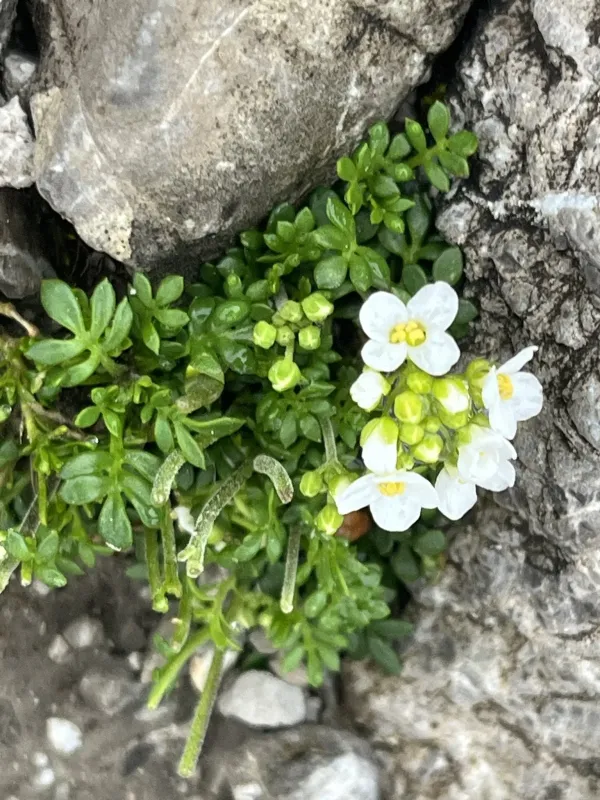
Description
Sowing dates
Seeds of Hornungia alpina can be sown directly into open ground during autumn or early spring. Because the seeds are tiny, they should be distributed on the soil surface and covered with a very thin layer of fine sand to ensure sufficient light exposure, which is necessary for germination.
For container-grown seedlings, start sowing indoors in late winter or early spring. Cold stratification is highly recommended; keep the seeds in a moist substrate at 2–5 degrees Celsius for about a month to break dormancy and ensure uniform emergence of the plantlets.
Once seedlings appear, provide bright light and maintain moderate temperatures around 16–18 degrees Celsius. Careful watering is essential during this stage to prevent damping-off, a common issue with young alpine plants grown in humid indoor conditions.
Transplanting into the permanent garden site should occur in late spring after the risk of frost has passed. Space individual plants approximately 15–20 centimeters apart to allow for proper development of the cushions and to ensure good airflow throughout the plant mass.
Propagation can also be achieved by division in early spring. Carefully lifting the clump and separating it into smaller rooted portions allows for quick establishment. This method is preferred for maintaining the specific characteristics of mature plants in the alpine garden.
Growing requirements
Hornungia alpina is a member of the Brassicaceae family, native to the mountainous regions of Europe. It thrives in environments that mimic high-altitude conditions, characterized by rocky outcrops, scree slopes, and well-drained, nutrient-poor mineral soils.
The primary requirement for this species is exceptional drainage. It cannot tolerate waterlogged roots, which leads to rapid decay. Incorporating grit or sharp sand into the planting hole is a standard practice to prevent moisture accumulation near the crown of the plant.
Sunlight requirements are significant; choose a location with full morning sun. However, in regions with intense summer heat, light afternoon shade is beneficial to prevent the cushion from scorching or drying out excessively, which would diminish its aesthetic value.
This alpine perennial is hardy and well-adapted to cold climates. It survives harsh winters under snow cover, but it may require protection from late winter thaws when moisture around the roots can lead to root rot if the drainage is not perfect.
Fertilization should be kept to a minimum. Over-feeding causes the plant to lose its compact, low-growing habit and become leggy. A light application of slow-release mineral fertilizer in early spring is sufficient to support healthy foliage and a profuse flowering display.
Main diseases and pests
The most significant threats to Chamois cress are fungal diseases, particularly those affecting the root system. Overwatering or poor soil structure promotes the development of Pythium and other pathogens that quickly destroy the plant's delicate tissues.
Slugs and snails pose a nuisance, particularly in rainy weather, as they feed on the fresh, succulent foliage. Utilizing physical barriers such as copper tape or coarse gravel around the base of the plant can effectively deter these pests without the need for chemical baits.
Aphids occasionally infest the flowering stems. Regular monitoring is encouraged, and if an infestation is detected, simple interventions such as washing the foliage with a mild soap solution or applying organic insecticidal sprays are usually sufficient to clear the problem.
Powdery mildew can occur if the plants are placed too closely together or in stagnant air conditions. Improving ventilation by pruning back surrounding vegetation and ensuring proper spacing during the initial planting phase are the best preventative measures against such outbreaks.
Overall plant health is closely linked to maintaining the right environmental balance. By choosing a well-drained, sunny spot and avoiding excessive nitrogen, most biological threats can be kept at bay, allowing the plant to reach its full potential in a rock garden setting.