
Hoya carnosa
Hoya carnosa (L. f.) R. Br.
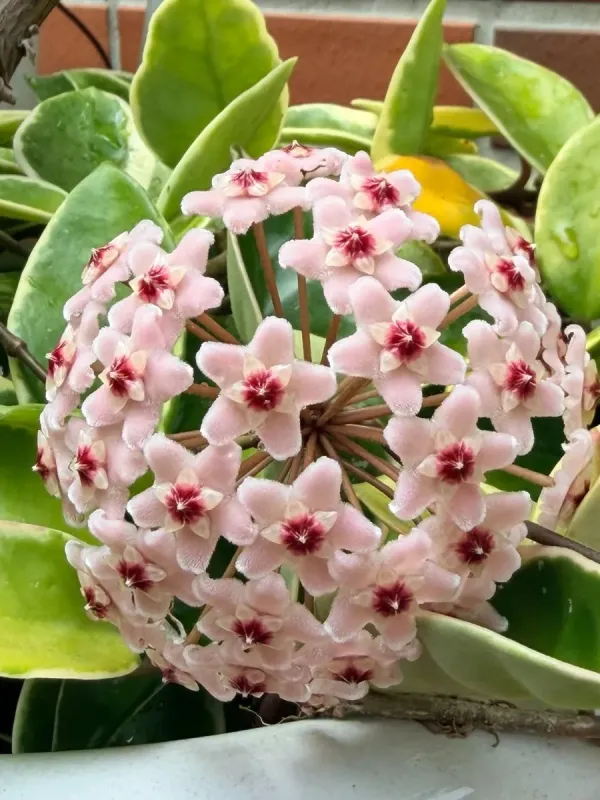
Description
Growing requirements
Hoya carnosa, commonly known as the wax plant, is a perennial vine belonging to the Apocynaceae family. Native to tropical regions of Asia and Australia, this plant has evolved as an epiphyte, using its aerial roots to anchor itself to trees in dense forest environments.
The cultural requirements for Hoya carnosa demand bright, indirect sunlight. While the plant can tolerate lower light levels, it requires significant light intensity to trigger blooming. Direct sun, however, should be avoided to prevent scorching the thick, succulent-like foliage.
Temperature management is critical for the lifecycle of the wax plant. It thrives in temperatures between 18°C and 25°C. A cooler period during the winter months, with temperatures dropping near 15°C, is highly recommended to initiate the development of inflorescences in the spring.
Soil structure should be porous and well-draining to mimic natural growing conditions. A mix consisting of orchid bark, perlite, and high-quality peat moss is ideal, as it ensures adequate oxygenation to the roots and prevents water stagnation, which is a major risk factor.
Agrotechnical maintenance focuses on a cycle of wetting and drying. Watering should be deep but infrequent, allowing the substrate to dry out significantly between sessions. Fertilizer applications should be balanced, focusing on potassium and phosphorus to support the flowering process.
Main diseases and pests
Hoya carnosa is primarily susceptible to infestations by mealybugs and scale insects. These pests often congregate on the undersides of leaves and at the nodes, necessitating the use of horticultural oils or systemic insecticides to manage and eliminate the colonies effectively.
Spider mites represent a secondary threat, particularly in environments with low humidity and poor ventilation. Keeping the plant hydrated and ensuring air movement around the canopy can significantly reduce the risk of mite population outbreaks.
Root rot, driven by fungi such as Phytophthora or Pythium, is the most destructive disease for this culture. It is almost exclusively caused by overwatering or the use of heavy, compacted soil that fails to drain efficiently, leading to rapid tissue death.
Botrytis blight can occur in cool, damp conditions, manifesting as gray mold on the flowers or stems. Removing infected parts and adjusting the environmental humidity are the first steps in managing this fungal pathogen to prevent further spreading.
Nutrient deficiencies or chemical stress, such as mineral buildup from tap water, can lead to marginal chlorosis or stunted leaf development. Periodic flushing of the soil with distilled or filtered water is recommended to maintain optimal soil chemistry for long-term health.