
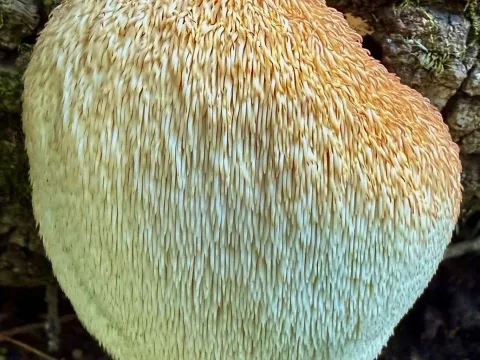
Lion's Mane Mushroom
Hericium
Cultivation of Lion's Mane (Hericium erinaceus), a member of the Hericiaceae family, is a specialized process requiring precise environmental control.
What the section contains

Lion's Mane Mushroom
The process begins with the preparation of a sterilized substrate, typically composed of hardwood sawdust, wood chips, or agricultural waste mixed with organic supplements.
Inoculation with high-quality mycelium must be performed in a cleanroom environment to ensure the mycelium dominates the substrate without competition.
The incubation phase lasts several weeks in the dark, allowing the mycelium to fully colonize the substrate block before it is introduced to fruiting conditions.
Strategic scheduling of block production is essential for farms that aim for a continuous, year-round harvest to meet steady market demand.
Lion's Mane requires a specific microclimate: during the fruiting phase, a temperature range of 15–18 degrees Celsius is recommended for optimal growth.
Humidity levels must be strictly maintained between 85% and 90% to prevent the delicate spines from drying out or yellowing.
Air exchange is critical, as high CO2 levels will deform the fruiting body and inhibit the development of the characteristic long, icicle-like spines.
Substrate moisture content should be managed carefully, usually maintained at approximately 60–65%, ensuring the fungus receives adequate water for body mass.
Indirect lighting of low intensity is required to signal the fungus to transition from the vegetative growth phase to the productive fruiting phase.
The biological efficiency of commercial Lion's Mane cultivation typically ranges between 20% and 30% relative to the dry weight of the substrate used.
Producers usually expect two to three successive flushes per block, with the first flush consistently providing the highest quality and yield.
Productivity is highly dependent on the genetic strain selected and the nutritional composition of the substrate, particularly the nitrogen-to-carbon ratio.
Total harvest output is maximized through the use of climate-controlled chambers that automate environmental adjustments based on real-time sensor data.
Optimized growing protocols help to reduce cycle times, allowing for more efficient use of space and resources within the facility.
The most common biological threats include green mold (Trichoderma), which thrives in damp, nutrient-rich environments and can outcompete the fungus.
Sciarid flies are significant pests; their larvae feed on mycelium and damage the developing fruiting bodies, leading to quality loss and bacterial rot.
Bacterial contamination, often caused by stagnant air and water pooling on surfaces, can cause lesions and slime on the mushroom structure.
Maintaining a sterile laboratory environment and rigorous sanitation in the fruiting chamber are the primary defenses against these threats.
Integrated Pest Management (IPM) practices, such as using fine screens on vents, are essential to prevent insect infestation without chemical use.
Harvesting should occur when the mushrooms are firm and the spines are well-developed, but before the mushroom releases spores, which signals maturity.
Mushrooms are harvested by cutting at the base, ensuring no substrate residue remains attached to the harvested product for a cleaner appearance.
Post-harvest handling requires quick cooling to preserve texture, as Lion's Mane is highly perishable and sensitive to handling damage.
Due to its high demand in the functional food and nutraceutical industries, proper packaging and storage are crucial to maintaining its market value.
Common commercial storage techniques include vacuum sealing and deep freezing, which lock in both the culinary qualities and the beneficial bioactive compounds.