
Lion's Mane Mushroom
Hericium erinaceum(Bull Fr.)Pers.
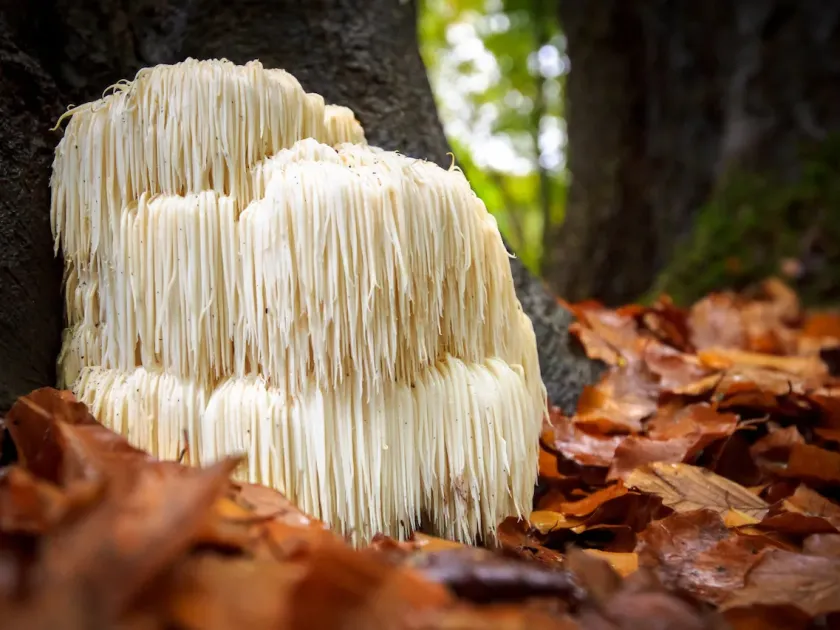
Description
Sowing dates
Lion's Mane (Hericium erinaceum) is a wood-decay fungus belonging to the Hericiaceae family. In a controlled agricultural environment, it is cultivated on processed substrate blocks typically composed of hardwood sawdust, wood chips, and organic supplements like wheat bran or rice bran.
The cultivation process begins with the inoculation of sterile substrate bags with high-quality mushroom mycelium. These bags are stored in a dark incubator room at temperatures between 22°C and 24°C to allow the mycelium to fully colonize the substrate over a period of 3 to 5 weeks.
Once the substrate is fully colonized, the blocks are transferred to a fruiting chamber where the conditions mimic its natural forest habitat. This includes a drop in temperature to 16–18°C and an increase in relative humidity, which triggers the development of the mushroom primordia.
Proper pH regulation of the substrate, ideally maintained between 5.5 and 6.5, is essential for healthy mycelial growth. Achieving a uniform density within the substrate bags ensures that the fruiting bodies develop consistently across the entire batch.
Continuous production is achieved through staggered inoculation schedules. By maintaining multiple chambers in different stages of the lifecycle, farmers can ensure a steady supply of fresh Lion's Mane mushrooms to meet market demand throughout the year.
Growing requirements
The climate requirements for Lion's Mane are specific and critical. High levels of humidity, maintained at 85–90%, are necessary to prevent the fruiting bodies from drying out. However, stagnant air must be avoided to prevent the buildup of pathogens.
Carbon dioxide (CO2) management is a key technical requirement. High CO2 concentrations within the fruiting chamber lead to the inhibition of the typical long "spines" or icicles, resulting in a dense, clump-like growth that is less desirable for high-end markets.
Fresh air exchange rates of 4 to 6 times per hour are required to keep CO2 levels low and oxygen levels optimal. This ventilation prevents the overheating of the mycelial blocks, which can occur due to the biological heat generated during the rapid growth phase.
Lighting should be indirect and consistent, typically around 500–1000 lux for 10–12 hours a day. Light is a morphological trigger that helps the mushroom develop its classic globular shape and long downward-pointing spines.
Water quality is just as important as the climate. Using pure, filtered water in the humidification systems prevents the accumulation of heavy metals or chemical residues that could be absorbed by the fruiting bodies, ensuring the final product remains safe and organic.
Yield
The yield of Lion's Mane is generally measured as a percentage of the total substrate weight. An efficient commercial production cycle can achieve a 20–25% biological efficiency, translating to several hundred grams of mushrooms per kilogram of substrate.
Production typically happens in "flushes," with the first flush being the largest. After harvesting the first crop, the blocks require a short recovery period and rehydration to stimulate subsequent flushes, though these will generally be smaller in size and weight.
Selecting the right strain is a fundamental factor in yield optimization. Some strains are bred specifically for faster colonization rates, while others are selected for their ability to produce thicker, more resilient spines that withstand post-harvest handling.
Careful management of temperature and humidity during the growth phase minimizes crop failure. Farmers who invest in automated environmental control systems often report more stable yield results, significantly reducing the economic risk associated with crop loss.
Market demand for Lion's Mane, driven by its culinary versatility and nutritional profile, supports the investment in high-yield cultivation technologies. This is a high-value crop that allows for profitable returns even on a small production scale.
Main diseases and pests
The most significant threat to a Lion's Mane crop is fungal contamination, particularly green mold (Trichoderma species). This contamination often occurs due to improper sterilization of the substrate or a breakdown in the farm's hygiene protocols.
Bacterial blotch, often caused by Pseudomonas bacteria, presents as slimy, discolored patches on the surface of the mushroom. This usually indicates that the mushroom has been in direct contact with liquid water or that the air circulation in the chamber is insufficient.
Insect pests, such as fungus gnats and mites, can be devastating to a commercial operation. These pests can introduce pathogens and consume the mycelium. Prevention through physical barriers like fine mesh screens and rigorous cleaning routines is essential.
Environmental fluctuations, such as sudden drops in humidity, can lead to "tip browning" on the spines. While this is an aesthetic issue rather than a total crop failure, it significantly reduces the marketability of the produce.
Effective management of these threats relies on non-chemical approaches. Maintaining a pristine environment and practicing strict bio-security measures are the most effective ways to protect the crop and ensure high-quality, chemical-free harvests.
Harvesting
The ideal harvest time for Lion's Mane is when the spines are 2–4 centimeters long and the mushroom is firm to the touch. Harvesting before the spines become loose and start releasing spores preserves the best culinary texture and appearance.
Harvesting is performed by hand using a sharp blade to cut the mushroom at the base of the block. A clean cut ensures that no leftover tissue remains on the substrate, which helps prevent rot and prepares the block for the next developmental flush.
Post-harvest, the mushrooms should be cooled to 2–4°C immediately. Because Lion's Mane mushrooms continue to respire after harvest, cooling is vital to slow down metabolism and prevent the mushrooms from losing moisture and turning brown.
Packaging must provide ventilation to avoid moisture accumulation, which can cause rapid spoilage. The delicate nature of the spines makes individual packaging or gentle layering in ventilated containers the best practice for logistics and retail display.
For long-term storage, Lion's Mane can be dried at low temperatures or freeze-dried. This preserves its bio-active compounds, such as hericenones and erinacines, which are highly valued in the production of natural health supplements and functional foods.