
Heliocereus aurantiacus
Heliocereus aurantiacus
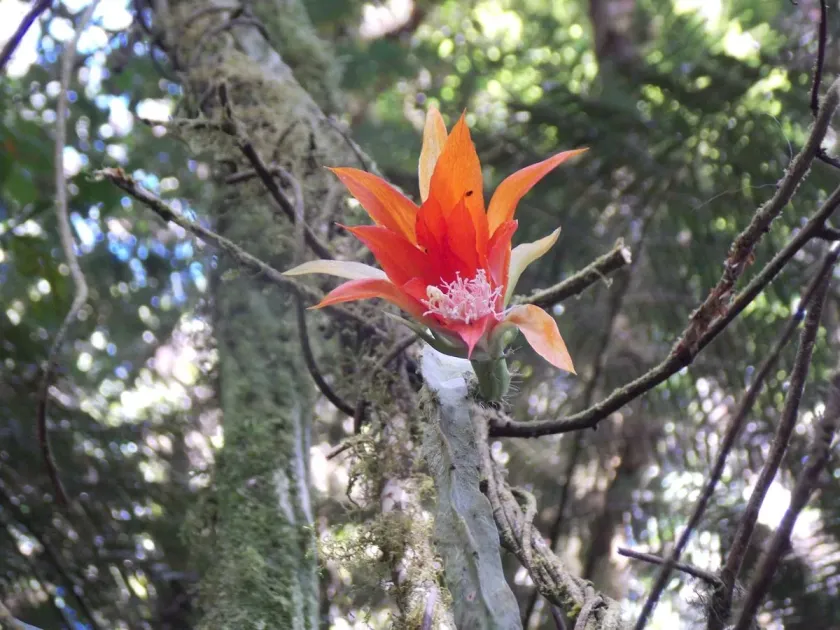
Description
Growing requirements
Heliocereus aurantiacus is a distinctive member of the Cactaceae family, native to the tropical regions of Central America. This plant typically grows as an epiphyte or lithophyte in its natural habitat.
Successful cultivation requires a well-draining, porous substrate composed of high-quality cactus mix with added pumice or coarse sand to prevent any water accumulation near the roots.
The plant thrives in bright, filtered light. Direct scorching sunlight should be avoided to prevent tissue burns, making semi-shaded locations with high ambient light the best choice.
Temperature management is critical; the species prefers a warm growing season between +22°C and +28°C. A distinct winter dormancy period at cooler temperatures is necessary for successful blooming.
Regarding its utility, the species is highly regarded for its aesthetic value. Its striking orange, funnel-shaped flowers provide significant ornamental interest in both private collections and specialized botanical nurseries.
Main diseases and pests
Root rot is the most common threat to Heliocereus aurantiacus, usually caused by overwatering or poor drainage systems in the potting containers.
Insect pests such as mealybugs and spider mites frequently target the plant, especially in low-humidity environments, leading to distorted growth and plant decline.
Integrated pest management involves physical removal of visible insects followed by the application of horticultural soaps or systemic insecticides when infestation levels warrant.
Fungal infections can manifest as dark spots on the stems, which requires immediate quarantine of the plant and removal of affected tissues to prevent total loss.
Maintaining proper air circulation around the stems is an essential prophylactic measure to discourage the establishment of both pests and fungal pathogens.