
Bitter sneezeweed
Helenium amarum (Raf.) H. Rock
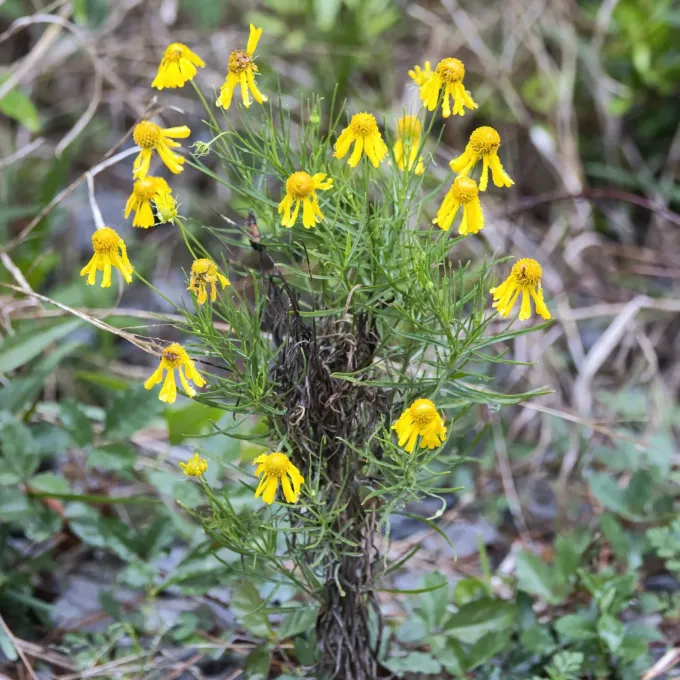
Description
Sowing dates
Bitter sneezeweed is an annual herbaceous plant that grows primarily from seed. Sowing in open fields should take place in late spring once the soil temperature is consistently above 15°C.
Seeds are small and should be sown at a shallow depth of 0.5 cm. Light surface harrowing or pressing the seeds into the soil is sufficient to ensure good germination rates.
For more control, especially in colder climates, starting the seeds indoors in trays during March is recommended. This allows for transplanting established seedlings later in the season.
Spacing is essential for the crop's development. Plants should be thinned or placed at a distance of approximately 20–30 cm apart to allow for adequate ventilation and root growth.
The plant is highly capable of self-seeding, which makes it a persistent presence in fields where it has been successfully established and managed correctly.
Growing requirements
Helenium amarum, a member of the Asteraceae family, is native to the southern and central United States and northern Mexico, favoring open plains and prairies.
The crop thrives in full sunlight. Providing sufficient solar exposure is necessary to maintain the plant's structural integrity and encourage the production of its characteristic yellow flowers.
It prefers well-drained, sandy or loamy soils. It is notably drought-tolerant, capable of surviving periods of minimal rainfall that would wilt more sensitive crops.
Soil pH preference is broad, as the plant successfully grows in neutral to slightly acidic soils. It does not require high levels of fertilization to reach maturity.
Good drainage is the most critical factor for success. Waterlogging quickly leads to root problems and should be avoided when selecting the planting site.
Main diseases and pests
Due to the presence of sesquiterpene lactones, the plant is naturally bitter and toxic to many herbivores, which provides significant protection against common insect pests.
The most frequent health issues in this crop relate to environmental conditions, particularly high humidity, which can lead to fungal infections such as powdery mildew.
Root rot is the primary threat to the crop's longevity. This is almost exclusively caused by poorly drained soil or excessive moisture accumulation during rainy seasons.
Aphids can occasionally be observed on the undersides of leaves. However, infestations are rarely severe enough to require chemical intervention in healthy, well-spaced stands.
Effective management includes regular monitoring for signs of rot and ensuring that weeds do not compete with the crop for light and nutrients, thereby reducing plant stress.