
Hedyotis tenelliflora
Hedyotis tenelliflora
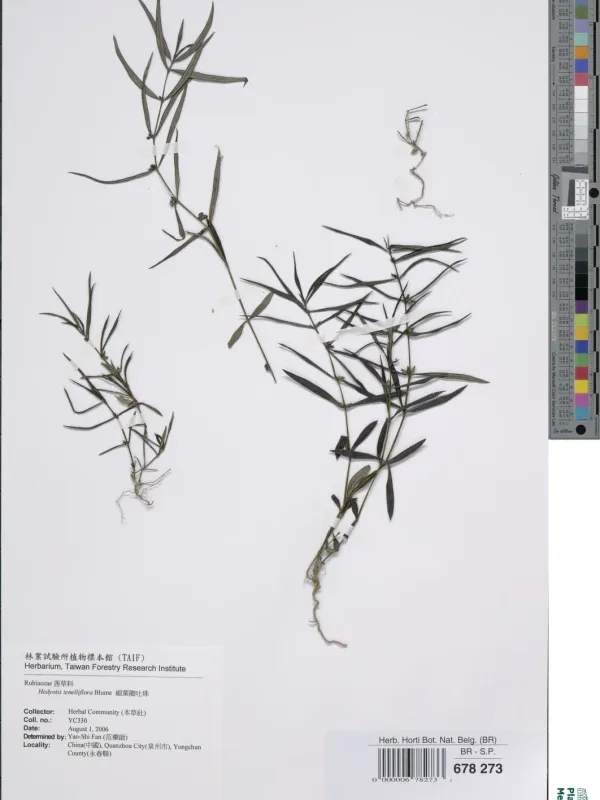
Description
Sowing dates
Hedyotis tenelliflora belongs to the Rubiaceae family and requires stable environmental conditions to ensure successful germination. Seeds should be sown when soil temperatures reach 18–20 degrees Celsius, ensuring optimal metabolic activity.
Spring is the ideal season for planting, provided that the risk of frost has passed. Planting depth should be minimal, around 1–2 centimeters, to prevent exhausting the seed's energy reserves before emergence.
To maximize yields, a row spacing of 30–40 centimeters is recommended. This spacing ensures proper air circulation and provides each plant with the necessary space to develop a robust root system.
Pre-soaking seeds in growth stimulants can shorten the germination phase significantly. Under controlled conditions, seedlings typically emerge within 10–15 days after initial planting.
Thinning out weaker seedlings is essential during the early stages of growth to reduce competition. This allows the strongest plants to reach their full potential and ensures a uniform stand across the field.
Growing requirements
This crop prefers environments with diffused sunlight rather than harsh, direct exposure. Partial shading may be necessary in hotter regions to protect the delicate leaves from overheating and potential scorching.
Soil composition should be light and well-draining, with a pH balance between 6.0 and 7.0. The plant is highly sensitive to waterlogged conditions, which can lead to rapid root degradation.
Irrigation management requires a balanced approach. While the crop needs consistent moisture for active growth, over-saturation must be avoided to prevent fungal issues in the root zone.
The optimal temperature range for active vegetation is between 22 and 26 degrees Celsius. Temperatures below 10 degrees Celsius tend to slow down physiological processes, causing a stunting of growth.
Nutrient management is critical; nitrogen-based fertilizers should be applied during the primary growth phases. Later in the season, potassium-rich fertilizers support stem strength and general plant resilience.
Main diseases and pests
Root rot is the most significant threat to Hedyotis tenelliflora, usually caused by over-irrigation or poorly drained soil. If detected, management requires immediate adjustment of the water schedule and sanitation of the site.
Pests like aphids and spider mites can colonize the foliage, reducing plant vitality. Integrated pest management, including the use of biological control agents, is preferred over aggressive chemical intervention.
Poor ventilation within the planting area can facilitate the development of powdery mildew. Proper plant spacing and regular inter-row cultivation help maintain airflow and mitigate this risk.
Bacterial leaf spots may occur in environments with high humidity. It is vital to remove affected plant parts immediately to prevent the spread of the pathogen to healthy neighbors.
Weed management is vital during the early vegetative stages. Mechanical weeding between rows protects the crop from resource competition and helps maintain the health of the primary stand.
Harvesting
The optimal harvest timing is during the peak flowering phase, when the concentration of secondary metabolites is at its highest. Monitoring the opening of flower buds helps determine the best window for collection.
Harvesting involves cutting the stems 5–10 centimeters above the soil level. This method often stimulates the plant to produce a secondary growth flush if the conditions remain favorable throughout the season.
Post-harvest processing involves drying the biomass in a shaded, well-ventilated area. Temperatures should not exceed 40 degrees Celsius, as excessive heat can degrade valuable bioactive compounds within the herb.
Proper storage is essential to maintain product quality. Dried materials should be placed in light-proof, airtight containers to protect the crop from moisture and ultraviolet radiation degradation.
After the harvest, crop residues should be cleared or incorporated back into the soil as organic amendment. This practice contributes to soil fertility and prepares the field for subsequent planting cycles.