
Hatiora salicornioides
Hatiora salicornioides
Description
Growing requirements
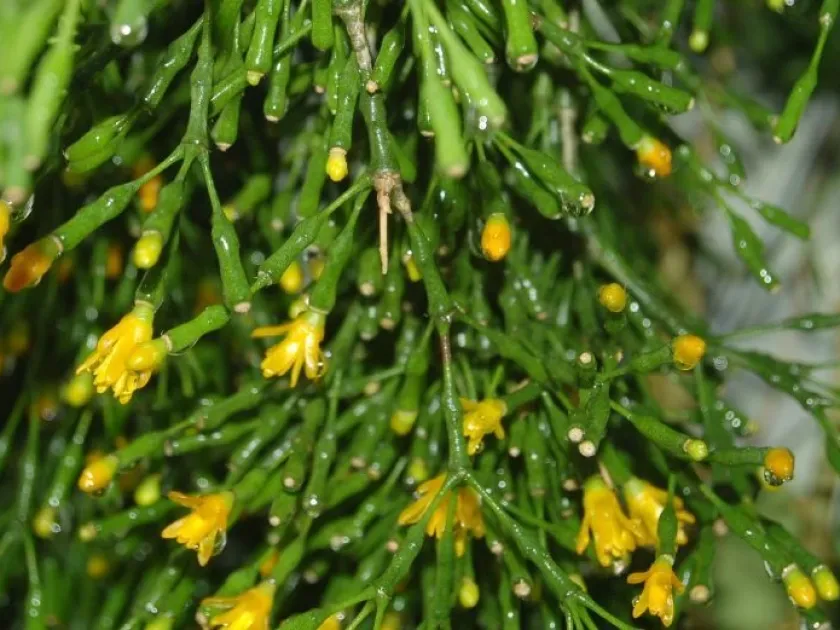
Hatiora salicornioides, commonly known as the dancing bones cactus, is a member of the Cactaceae family native to the tropical forests of Brazil. Unlike desert cacti, this species is an epiphyte, typically found growing on tree branches or rocky crevices.
The plant is characterized by its bottle-shaped, segmented stems that branch extensively, creating a dense, shrub-like structure. Its distinct growth habit makes it a highly sought-after specimen for indoor collections and hanging baskets.
For successful cultivation, Hatiora requires a well-draining, airy substrate. A mix consisting of peat moss, perlite, and coarse sand or bark is ideal to mimic its natural epiphytic environment and prevent waterlogged soil.
Lighting should be bright but filtered. It thrives in locations with indirect sunlight, such as east or west-facing windows. Prolonged exposure to intense direct midday sun can bleach the segments and damage the plant's succulent tissues.
Temperature management is critical for blooming. During the active growth phase, temperatures between 20°C and 25°C are optimal. A cooler period during winter (12–15°C) is necessary to initiate the production of its characteristic yellow, bell-shaped flowers.
Main diseases and pests
Mealybugs are the most common pests found on Hatiora, often hiding in the joints of the stem segments. Manual removal using an alcohol-soaked swab or the application of insecticidal soap is usually effective for small infestations.
Root rot remains the most significant threat to plant health, caused primarily by overwatering or poor drainage. To prevent this, ensure that the soil is almost dry before providing the next watering cycle and never leave the pot sitting in standing water.
Spider mites may appear if the indoor environment becomes too dry, especially during winter heating months. Regular misting and maintaining adequate humidity levels help prevent these tiny pests from colonizing the plant.
Stem base rot, often triggered by fungus, occurs when the plant is planted too deeply in the substrate. Always keep the root collar slightly above the soil surface and ensure the top layer of the potting medium dries out quickly.
General yellowing or dropping of segments often points to environmental stress, such as sudden temperature fluctuations or cold drafts. Proper placement away from air conditioning vents and heating sources is essential for maintaining plant vigor.