
Hatiora herminiae
Hatiora herminiae
Description
Growing requirements
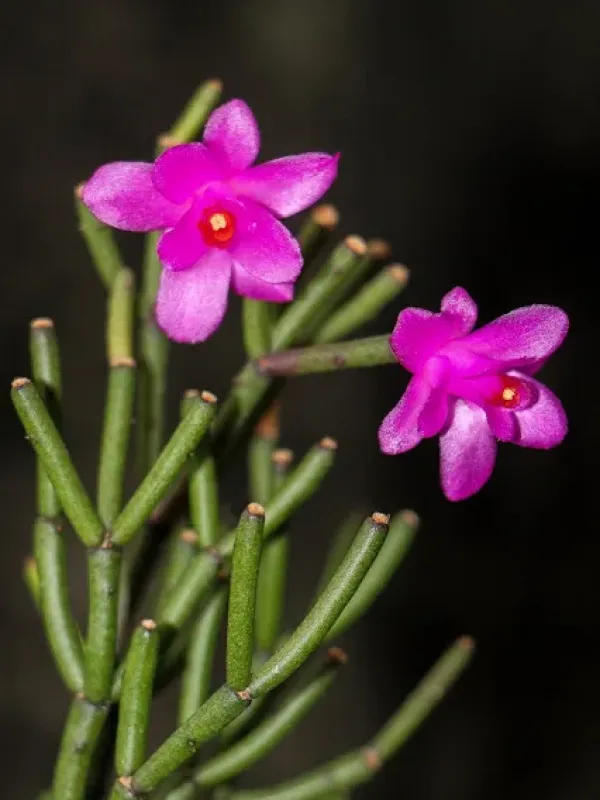
Hatiora herminiae is a delicate epiphytic cactus belonging to the Cactaceae family. Native to the mountain regions of Brazil, it naturally thrives in humid forest conditions, often growing on branches of trees or in rock crevices where organic debris accumulates.
The botanical structure of the plant features slender, cylindrical, and segmented stems that grow in a branching pattern. Its most striking ornamental feature is the appearance of vibrant pink to lilac-colored bell-shaped flowers that bloom at the tips of the segments.
To cultivate this species successfully, growers must mimic its natural canopy environment. Bright, filtered light is essential, as direct, harsh sunlight can damage the epidermis of the stems. High ambient humidity is also crucial for maintaining the health of the plant.
The potting medium must be highly porous and well-draining. A typical mix includes peat moss, perlite, and coarse sand or orchid bark. This ensures that oxygen can reach the roots while preventing the substrate from becoming waterlogged, which is a common cause of failure.
During the active growing season, consistent moisture and moderate temperatures are preferred. However, a cooling period during winter, with temperatures ranging from 12°C to 15°C, is necessary to induce the formation of flower buds for the following spring season.
Main diseases and pests
Common pests affecting Hatiora herminiae include mealybugs, which hide in the joints of the segments, and spider mites, often thriving in dry indoor conditions. Regular inspection and the use of insecticidal soap can effectively manage these infestations.
Root rot and stem rot are the primary threats caused by fungal pathogens. These are almost exclusively linked to improper irrigation practices or poor soil drainage. Maintaining a strict watering schedule and using high-quality potting substrate are the best preventive measures.