
Senegal spike-thorn
Gymnosporia senegalensis
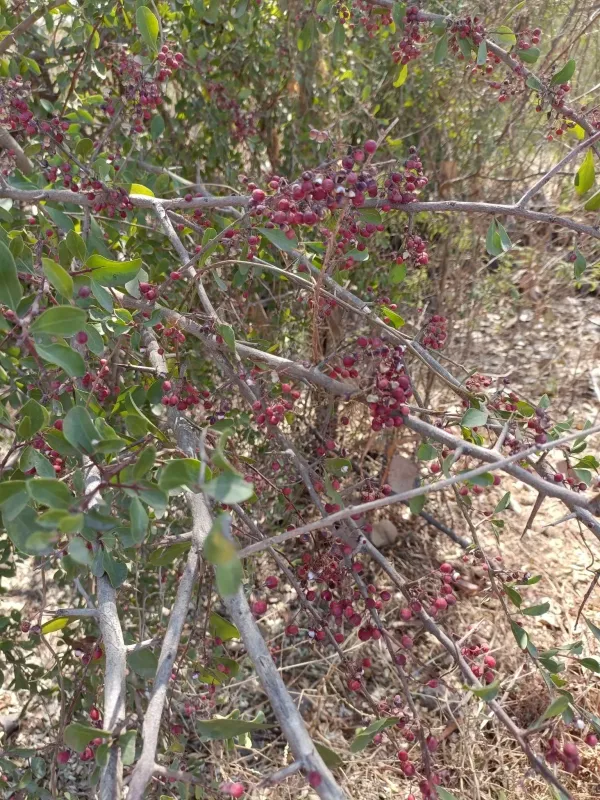
Description
Growing requirements
Senegal spike-thorn (Gymnosporia senegalensis) is a woody shrub or small tree belonging to the Celastraceae family. It is widely recognized for its high adaptability to arid and semi-arid environments across tropical Africa and the Arabian Peninsula.
This species thrives in savanna and bushland habitats where water availability is often limited. It possesses remarkable physiological adaptations, such as a deep root system and coriaceous leaves, which allow it to endure long periods of drought.
The plant requires well-drained soil types, performing well in sandy and rocky conditions. It is classified as a sun-loving species, showing optimal growth under high light intensity and warm temperatures.
Botanically, it is distinguished by its formidable thorns and small, clustered flowers. These defensive structures allow the shrub to serve as a vital component in land stabilization and as a shelter for smaller wildlife species in its native habitat.
Economically, the plant is valued for its bark, roots, and leaves in ethnobotanical applications. It serves as a medicinal source for treating various infections and as a material for traditional crafts, demonstrating significant cultural value.
Main diseases and pests
The main threats to Gymnosporia senegalensis include habitat degradation caused by overgrazing and deforestation. These human-induced activities directly impact the density and health of natural populations in its native regions.
Insects such as defoliating caterpillars can occasionally cause damage to the shrub, although the plant's structural defenses offer a level of protection. Monitoring for signs of localized infestations is recommended in managed nurseries.
Fungal pathogens associated with high humidity and stagnant water are the primary risks to root health. Proper site selection focusing on drainage is essential to prevent rot-related mortality in cultivated specimens.
Climate change, specifically shifting rainfall patterns, may impact the regeneration cycles of the species. Stress on seedlings during extended dry spells is a critical factor limiting the expansion of natural populations.
Sustainable harvesting is crucial, as over-collection of bark and roots for medicinal trade can lead to the permanent loss of individual trees. Proper management and propagation techniques are needed to sustain its utilization.