
Gymnosporia heterophylla
Gymnosporia heterophylla
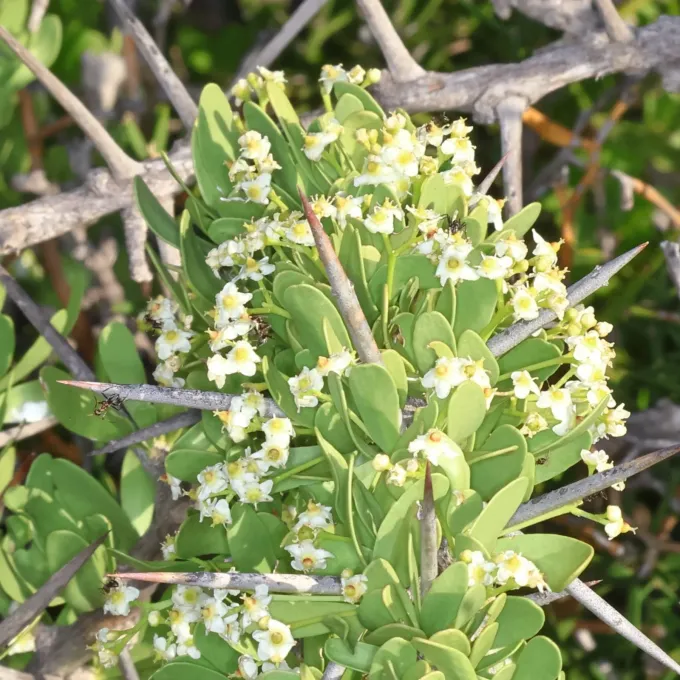
Description
Growing requirements
Gymnosporia heterophylla is a prominent member of the Celastraceae family, recognized for its dense, spiny growth habit. Originating from Southern Africa, this shrub is naturally adapted to a wide range of habitats, including savannahs, woodland edges, and rocky slopes.
The plant thrives in well-drained soil types, demonstrating a high tolerance for varying fertility levels. It is particularly valued in xeriscaping projects due to its remarkable drought resistance once the root system is established in its permanent location.
Regarding climate, it prefers full sun exposure to maintain its compact shape and promote healthy foliage density. While it can handle light shade, excessive darkness will often lead to sparse branching and reduced defensive capabilities of the thorns.
Agricultural management requires minimal intervention, primarily focusing on early-stage formation pruning if the shrub is intended for security hedging. Its natural resistance to many environmental stressors makes it a low-maintenance choice for large-scale landscaping.
Beyond its physical barrier function, the species possesses significant ethnomedicinal value. Local populations have traditionally utilized extracts from its bark and roots, underscoring the plant's importance within local botanical resources and biodiversity conservation.
Main diseases and pests
The primary threats to this species include fungal leaf diseases that occur during periods of high humidity and poor air circulation. It is essential to ensure that planting density allows for sufficient airflow around the canopy to prevent such outbreaks.
Common insect pests such as aphids and scale insects may occasionally infest the plant, particularly under stressed conditions. Integrated pest management, focusing on biological controls and manual removal of infested shoots, is highly recommended over chemical usage.